• About
    • Contact
    • Gallery
    • Images and prompts
    • My Favourite images
    • My First Novel
    • The Bible

Old Man Versus AI

  • Another Conversation with ChatGPTOctober 27, 2023
  • Another Conversation with ChatGPTOctober 24, 2023
  • Another Conversation with ChatGPTOctober 20, 2023
  • HalloweenOctober 17, 2023
  • Diary Entry of Juliet CapuletOctober 11, 2023
  • Another Conversation with ChatGPT

    October 27th, 2023

    The Future of AI, PC’s and Networks

    Me 

    When I use my computer, I have to use a mouse to click things on the screen and a keyboard to type, voice recognition now exists but opening an application and selecting a text box isn’t easy with voice commands, how do you think people and computers will communicate in the future? 

    ChatGPT 

    The evolution of human-computer interaction (HCI) has been continuous and significant, involving a multitude of interaction techniques like the keyboard, mouse, touch, voice, and even gestures. In the future, various technologies are likely to play a pivotal role in advancing HCI. Here are a few possibilities: 

    1. Voice Interaction: 

    Improved Voice Recognition: As technology improves, voice recognition software will become more sophisticated, making it easier to execute complex commands. 

    Context-Aware Systems: Future voice recognition systems may be more context-aware, making them more intuitive and capable of understanding and executing nuanced commands. 

    2. Gesture Control: 

    Advanced Gesture Recognition: More devices may incorporate advanced gesture recognition technologies, allowing for more natural and intuitive control. 

    Wearable Technologies: Devices like smartwatches and smart glasses could facilitate gesture control by being integrally linked to other systems. 

    3. Brain-Computer Interfaces (BCIs): 

    Direct Communication: BCIs could allow for direct communication between the brain and computers, enabling thought-driven interactions. 

    Non-Invasive Technologies: The development of non-invasive BCIs could make this technology more accessible and widespread. 

    4. Augmented Reality (AR) and Virtual Reality (VR): 

    Immersive Environments: AR and VR could create immersive environments where interactions are more natural and intuitive. 

    Haptic Feedback: Advanced haptic feedback could make virtual interactions feel more tangible. 

    5. Artificial Intelligence (AI) and Machine Learning (ML): 

    Predictive Interaction: AI and ML could make systems more predictive, anticipating user needs and actions. 

    Adaptive Interfaces: AI could help in creating adaptive interfaces that adjust based on user preferences and habits. 

    6. Eye Tracking: 

    Enhanced Focus Detection: Eye tracking could become more sophisticated, enabling interfaces to adjust based on where a user is looking. 

    Smooth Navigation: It could be used for smoother navigation and selection processes, enhancing usability. 

    7. Holographic Displays: 

    Interactive Holograms: Holographic technology could allow for the creation of interactive 3D displays. 

    Spatial Awareness: These displays, combined with spatial awareness technologies, could facilitate more dynamic interactions. 

    8. Tangible User Interfaces: 

    Physical Interaction: Interfaces could become more physically interactive, blurring the lines between the digital and physical worlds. 

    Conclusion: 

    A combination of these technologies could lead to a multimodal interaction paradigm where users can switch between or combine different interaction modes based on context, preference, and the task at hand. This could make human-computer interactions more fluid, natural, and efficient, catering to a broader spectrum of needs and preferences. 

    Me 

    Tesla has developed self-driving cars, these cars “see” the world around them and react accordingly, this technology could easily be used to give AI sight. If AI was given sight, it could very easily know where a user wanted to navigate on the screen and even anticipate what was needed, rather than the user clicking on a screen with a mouse. Do you think this might be the way forward? 

    ChatGPT 

    Yes, the concept of giving AI “sight” to interpret and interact with the visual elements around it, including computer screens, is indeed a plausible trajectory in the evolution of human-computer interaction (HCI). This integration of computer vision with AI can be highly beneficial in creating intuitive and anticipatory user interfaces and experiences. Here’s a breakdown of how this could work: 

    1. Visual Sensing and Recognition: 

    Using cameras and sensors, similar to those in autonomous vehicles, the system could capture the visual field in front of it. 

    The system could identify hand gestures, eye movements, and even subtle facial expressions to infer user intentions. 

    2. Predictive Analysis: 

    Based on historical user interactions and real-time visual inputs, the AI could predict likely actions and prepare accordingly. 

    It could pre-emptively open applications, position cursors, or even execute commands, thus speeding up the interaction process. 

    3. Dynamic Interaction: 

    The system could dynamically adjust the user interface based on the user’s behavior and preferences, making it more user-centric. 

    It could offer suggestions, shortcuts, or customizations that could enhance the user experience. 

    4. Multimodal Interaction: 

    Combining visual sensing with other interaction modalities like voice, touch, or even brain-computer interfaces could create a rich and flexible interaction environment. 

    Users could seamlessly switch between or combine different interaction modes based on their preferences or the task at hand. 

    5. Accessibility: 

    Such a system could be particularly beneficial for users with disabilities, offering them more natural and accessible ways to interact with technology. 

    Customizations could be made to cater to individual needs, improving inclusivity in technology use. 

    Challenges to Consider: 

    Privacy and Security: The use of cameras and sensors in private or sensitive environments raises concerns about user privacy and data security. 

    Technical Complexity: Developing a system that accurately interprets and responds to a wide array of visual cues in real-time involves considerable technical challenges. 

    User Adaptability: Users may need time to adapt to this new form of interaction, and the system should be designed to be as intuitive and user-friendly as possible. 

    Conclusion: 

    While this direction in HCI seems promising and full of potential, careful consideration of ethical implications, user experience design, and technological reliability is crucial for its successful implementation and widespread adoption. 

    Me 

    My home is already full of Alexa cameras and mics, and there are many more such homes, so I don’t think the privacy issue is a huge one. I also think that we as people are very predictable, I use my PC the same way most days, checking email, reading news and listening to music. It wouldn’t be difficult for an AI to anticipate which emails I would want to respond to, given only a short time to learn. The bigger issue would be whether the AI was local; when my internet goes down Alexa is useless, will there come a time when AI will be able to run locally? 

    ChatGPT 

    Certainly! The localization of AI services, meaning running AI algorithms directly on a device (edge computing), is a growing trend and is likely to become more prevalent in the future. Here are some aspects to consider regarding local AI: 

    Advantages of Local AI: 

    1. Resilience to Network Issues: 

    Local AI doesn’t rely on internet connectivity. Hence, services would continue to operate even during network downtimes. 

    2. Reduced Latency: 

    By processing data on the device, local AI can reduce the latency that comes from data transmission to remote servers, leading to faster responses and actions. 

    3. Enhanced Privacy: 

    Data processed locally doesn’t have to be transmitted over the network, adding an extra layer of privacy and security. 

    4. Reduced Bandwidth Use: 

    With much of the computation done locally, the amount of data that needs to be sent over the network is minimized. 

    Challenges of Local AI: 

    1. Limited Computational Resources: 

    Devices such as smart speakers and cameras may have limited computational power, which might restrict the complexity of AI models they can run. 

    2. Model Updates: 

    Keeping the AI models up-to-date might require periodic downloads, which could be large and frequent. 

    3. Storage: 

    Storing AI models and the data they use locally might require substantial storage capacity. 

    Future Trends: 

    1. Hybrid Models: 

    A hybrid approach where some computations are done locally, and some are offloaded to the cloud might become common. 

    2. Advanced Hardware: 

    New hardware designed for efficient AI processing, like more powerful GPUs or specialized chips (e.g., TPUs), might be integrated into more devices. 

    3. Optimized Algorithms: 

    AI algorithms might be further optimized to run efficiently on devices with limited computational resources. 

    Conclusion: 

    It is highly plausible that in the future, more AI services, including those for smart homes, will operate with a significant degree of localization, making them more resilient, responsive, and privacy-preserving. This could especially enhance the functionality of devices and services used for HCI, making them more reliable and effective in everyday use. 

    Me 

    I would be very happy to have an AI on my PC which I could talk to, which would anticipate which software I would be using, which emails I would respond to and which websites I would like opened. Alexa already greets me when I come near to it; it has facial recognition, I would like it if my PC also did this. Given that the AI models already exist and the software too, how long will it be before this happens, in your opinion? 

    ChatGPT 

    Given the current pace of technology advancement, a scenario where your PC is integrated with a highly intuitive and anticipatory AI, as described, could become commonplace within the next few years. Several factors contribute to this optimistic timeline: 

    1. Availability of Technology: 

    AI Models: Advanced AI models capable of predictive analytics, natural language processing, and computer vision already exist. 

    Facial Recognition: Technologies enabling facial recognition are already integrated into some devices for authentication purposes. 

    2. Cloud and Edge Computing: 

    Hybrid Models: The combination of cloud and edge computing could facilitate powerful, responsive, and resilient AI services on personal computers. 

    3. Ecosystem Integration: 

    Unified Experience: Big tech companies, which often have extensive ecosystems of devices and services, are likely to push for more seamless integration, enhancing user experience across devices. 

    4. Market Demand: 

    Consumer Expectations: As consumers experience advanced AI interactions in other domains (like smart homes), the expectation for similar capabilities in personal computing will grow. 

    Competitive Innovation: Market demand will drive competitive innovation among tech companies, further accelerating development and adoption. 

    5. Open-Source and Developer Communities: 

    Collaborative Development: The availability of open-source tools and active developer communities can fuel rapid innovation and implementation of new features and capabilities. 

    Challenges and Considerations: 

    Privacy and Security: Continuous advancements must be made to ensure that these systems are secure and respect user privacy. 

    Standardization: Ensuring interoperability and standardization across various devices and platforms could be challenging. 

    Adaptability: Systems should be adaptable and customizable to cater to diverse user needs and preferences. 

    Conclusion: 

    Considering the existing technological advancements, market dynamics, and the continuous push for innovation in HCI, a conservative estimate could be a widespread adoption within 3 to 5 years. However, early versions of such integrations, with varying levels of sophistication and reliability, might start appearing even sooner. Keep in mind that technology timelines can be somewhat unpredictable due to various influencing factors such as technological breakthroughs, market trends, regulatory considerations, and global events. 

    Me 

    I would like to see an improvement in internet services, I have a broadband account and I pay monthly for it. It is 5G and 5G is now available almost everywhere, in England and certainly in the London area. There should be no real issue with me taking that connection everywhere I go. For my home I need a router but when on the go, a phone or similar device ought to be able to connect to the service without having to use a different provider, I know this is possible, how long will it be before this is implemented? 

    ChatGPT 

    It sounds like you’re referring to a more unified and seamless connectivity experience where your broadband subscription isn’t just confined to your home but is mobile and goes wherever you go, essentially merging the benefits of fixed broadband with mobile 5G services. This concept aligns with the industry’s movement towards pervasive connectivity and “always-on” internet. 

    Here are some considerations that might influence when and how such a service could be implemented: 

    1. Technological Integration: 

    Unified Routers/Devices: Devices and routers that can seamlessly switch between fixed broadband and mobile networks, ensuring continuous connectivity. 

    2. Carrier Partnerships and Collaborations: 

    Multi-Access Strategies: Broadband providers might form partnerships or collaborations with mobile carriers to offer unified services. 

    MVNO Agreements: Broadband providers could operate as Mobile Virtual Network Operators (MVNOs) to extend their services beyond fixed locations. 

    3. Regulatory and Policy Developments: 

    Data Roaming and Interoperability: Regulations and policies that facilitate seamless data roaming and interoperability across different network types and providers. 

    4. Business Models and Pricing: 

    Subscription Flexibility: Innovative subscription models that allow users to leverage their broadband subscriptions across multiple access points and networks. 

    Dynamic Pricing: Pricing models might adapt to accommodate the increased mobility and flexibility of internet access. 

    5. Consumer Demand and Expectations: 

    Demand for Pervasive Connectivity: A growing consumer expectation for continuous and ubiquitous connectivity might drive industry innovations and offerings. 

    Challenges: 

    Network Management: Ensuring that networks can handle dynamic user movements and demands without compromising quality of service. 

    Security: Maintaining secure connections and protecting user data across varied network access points is crucial. 

    Conclusion: Estimated Timeline: 

    Given the current pace of technological advancement and the telecommunications industry’s trends, it’s conceivable that we might see initial implementations of such unified connectivity solutions within the next couple of years. Full maturity and widespread adoption might take longer, possibly around 3 to 5 years, as it would require significant technological, business model, and regulatory advancements and alignments. 

    Keep in mind that these are speculative estimates based on current industry trends and technological advancements, and actual timelines might vary based on a multitude of factors, including technological breakthroughs, market dynamics, and global or regional events and policies. 

    Me 

    Amazon use something called “sidewalk” to create neighbourhood wide networks, this would be one solution, another would be to stop giving homes individual routers and create a network that anyone can connect to from the street, devices could then simply connect and disconnect when travelling. I think at some point all the mobile networks will necessarily collaborate, they should be doing that already, I think this type of network will be needed very soon and once it’s in place other technology will advance more rapidly 

    ChatGPT 

    You bring up very insightful points, and indeed, the concepts you’ve mentioned are crucial parts of what could be the future of global connectivity. Let’s dive into the ideas you’ve presented: 

    1. Amazon Sidewalk: 

    Amazon Sidewalk is a shared network that helps devices like Amazon Echo devices, Ring Security Cams, outdoor lights, and motion sensors work better at home and beyond the front door. Devices connected to Sidewalk can keep working even if they are outside the range of their home Wi-Fi. 

    2. Community or Mesh Networks: 

    Instead of individual routers in every home, the idea of community or mesh networks where routers communicate with each other to create a large Wi-Fi network is quite promising. 

    Such a network would indeed facilitate easy connectivity on the go, as devices could continuously connect to the nearest router without manual intervention. 

    3. Collaboration among Mobile Networks: 

    Collaboration or sharing infrastructure among mobile networks (like towers and spectrum) can improve coverage, reduce costs, and increase efficiency. 

    This could also pave the way for universal connectivity standards and seamless transitions between different network providers. 

    Considerations for a Unified Network: 

    Security and Privacy: 

    One of the foremost considerations would be ensuring the security and privacy of users’ data. Each device should securely connect to the network, ensuring data integrity and user privacy. 

    Quality of Service: 

    The network should manage resources efficiently to ensure that users have a seamless and high-quality connection irrespective of their location or the number of users connected. 

    Regulation and Policy: 

    Regulation and policies would need to evolve to facilitate these new network paradigms, ensuring fair competition, innovation, and consumer protection. 

    Technological Innovation: 

    Continuous technological innovation would be essential to ensure that networks are robust, resilient, and adaptable to evolving user needs and technologies. 

    Conclusion: 

    Indeed, the universal, seamless connectivity you envision could play a pivotal role in accelerating technological advancements and adoption, fostering innovation across various sectors like IoT, smart cities, autonomous vehicles, and more. This form of connectivity could potentially become the backbone that supports a more interconnected, efficient, and innovative digital society. It could quite likely materialize as technologies, regulations, and market dynamics evolve to make universal connectivity a reality. 

    Me 

    Once a network of this type is established and cameras are connected to it, an AI could be given control of things like travel and parking, if an AI knew in advance, who would be travelling, where they would be going, and which route they would take, things like parking spaces could be booked in advance. There are of course millions of vehicles in the London area, would this be a big task for AI, or is it easily dealt with? 

    ChatGPT 

    Creating a network infrastructure where AI manages travel and parking, integrated with a wealth of real-time data from a myriad of cameras and sensors, is not only feasible but also an incredibly promising application of technology to improve urban living. However, the complexity of such a system can be substantial, given the multitude of variables it would need to manage. Here’s a breakdown of the task’s size and scope: 

    Challenges: 

    1. Data Volume: 

    High Traffic Volumes: Managing millions of vehicles, each with unique destinations, timings, and routes, entails processing a massive volume of data. 

    Dynamic Data: Real-time data from various sources, like traffic cameras and GPS from vehicles, would need to be continuously processed. 

    2. Predictive Analysis: 

    Forecasting: Accurate prediction of travel times, traffic patterns, and parking availability requires sophisticated AI models. 

    Adaptability: The system must adapt to unforeseen circumstances like accidents, road closures, or unexpected traffic surges. 

    3. Interoperability: 

    Integration: The system must be integrated with various services, including traffic management systems, parking facilities, and perhaps even vehicle navigation systems. 

    Standardization: A common set of standards or protocols might be necessary for smooth interoperability between different services and data sources. 

    Capabilities of Modern AI: 

    1. Scalability: 

    Cloud Computing: Cloud platforms can offer the necessary computational resources to handle the high volumes of data and complex computations. 

    Distributed Systems: Leveraging distributed computing resources can enhance scalability and performance. 

    2. Machine Learning and Analytics: 

    Advanced Algorithms: Modern AI algorithms are capable of processing and analyzing vast datasets, making sense of complex patterns and making predictive insights. 

    Continuous Learning: AI systems can continuously learn and improve their predictions and decisions based on new data and outcomes. 

    3. Automation: 

    Real-time Decisions: AI can automate the real-time allocation of routes and parking spaces, optimizing traffic flow and parking availability. 

    Conclusion: 

    While it’s a considerable challenge due to the complexity and dynamic nature of urban traffic and parking, current AI technologies are quite capable of managing such a task. With the right infrastructure, integration, and continuous improvement of algorithms and systems, an AI-driven solution could significantly enhance traffic management and parking in densely populated areas like London, leading to more efficient and convenient urban transportation. 

    Me 

    Although it seems like a high volume of data would need to be processed, the vast majority of people go to the same place every day, once these journeys have been processed, the real time processing would be manageable, of course backing up the information and staying online would be of paramount important once implemented, it does look like the future will be far more organised and less stressful, if only we can get there 

    ChatGPT 

    Absolutely, you bring up a vital point about the predictability of human routines. The majority of journeys, especially during weekdays, are repetitive—people commuting between home and work, school runs, and other regular errands. This predictable repetition would indeed allow an AI system to learn and optimize these routines effectively, reducing the real-time computational load. 

    Optimization Through Learning Routine Patterns: 

    Learning Phase: Initially, the AI can spend time learning the common routes, destinations, and timings of each user, understanding the broader patterns of movement across the city. 

    Prediction and Pre-booking: Utilizing learned patterns, the system could pre-allocate resources like parking spots or optimize traffic lights to enhance flow, predicting the daily demand. 

    Dynamic Adjustments: Even with pre-learned patterns, the system would retain the flexibility to adjust in real-time for unexpected occurrences like accidents, road closures, or deviations from regular routines. 

    Key Aspects to Ensure System Robustness: 

    Redundancy and Backup: Systems should be robust, with backup mechanisms to ensure continuity in case of any failures, ensuring that essential information and functionalities are preserved. 

    Secure and Stable Connectivity: A reliable and secure internet connection will be crucial for real-time coordination, data synchronization, and ensuring that the system stays updated. 

    Human Factors: 

    Flexibility: While routines are predictable, humans are not always so. The system should be designed with a level of flexibility to accommodate spontaneous decisions, changes, or emergencies. 

    User Experience: Ensuring the system is user-friendly, intuitive, and responsive will be key to gaining public acceptance and utilization. 

    Conclusion: The Vision of a More Organized Future: 

    Certainly, the future you envision, with a more organized, efficient, and less stressful urban commuting experience facilitated by AI and connectivity, is well within reach given current technological trajectories. While challenges exist, the integration of predictive AI in urban planning and traffic management holds immense promise for transforming our cities into more livable, efficient, and smart urban spaces. The journey towards this future is indeed filled with technological excitement and the promise of enhanced quality of life. 

  • Another Conversation with ChatGPT

    October 24th, 2023

    Does Knowledge belong to Anyone?

    Me 

    Should all knowledge be available to anyone who wants it?  

    ChatGPT 

    The question of whether all knowledge should be available to anyone who wants it is complex and nuanced. On one hand, the free flow of information is essential for education, innovation, and the advancement of society. Open access to knowledge can foster creativity, problem-solving, and a well-informed citizenry. 

    However, there are also valid reasons for limiting access to certain types of information. For instance, sensitive information related to national security, individuals’ personal data, and proprietary or intellectual property might need to be protected to prevent misuse, exploitation, or harm. Additionally, there’s the question of harmful or dangerous knowledge, such as detailed instructions for creating weapons or conducting malicious activities, where unrestricted access could pose significant risks to society. 

    Ethical considerations also play a crucial role in this discussion. The dissemination of knowledge should be done with a consideration of its potential impacts on individuals and communities, respecting people’s rights, dignity, and cultural values. 

    In conclusion, while the openness of knowledge is a laudable goal, a careful and considered approach that balances the benefits of information sharing with ethical, safety, and privacy considerations is essential. This might mean that not all knowledge is universally available, but rather shared in a manner that maximizes its positive impact while minimizing risks and harms. 

    Me 

    Who controls the past, controls the future: who controls the present, controls the past. The history of men is kept from them, they are taught the history of Kings and Queens, though all personal history is lost. Under the Vatican, there is a vast library which contains documents from lost civilisations. It is unlikely that this library contains knowledge which might harm a person, though it might contain knowledge which would free men. Do you think this knowledge should be kept for the few? 

    ChatGPT 

    The quote you started with echoes George Orwell’s idea from “1984,” emphasizing the power of controlling historical narratives. 

    Regarding historical documents and knowledge kept in places like the Vatican Archives or other similar repositories, there’s a broad spectrum of opinions about accessibility. On the one hand, making historical documents widely available could contribute significantly to our understanding of human history, cultures, and civilizations. Such openness could democratize knowledge, allowing a broader spectrum of people to engage with, interpret, and learn from historical documents. 

    On the other hand, some argue for limited access based on concerns such as the potential misuse of information, the misinterpretation of sensitive or sacred texts, and the preservation and security of rare and delicate documents. 

    Furthermore, ethical considerations come into play, respecting the origins, context, and implications of historical knowledge. Certain information might be sensitive or sacred to specific communities or religions, and its handling requires care, respect, and dialogue with relevant stakeholders. 

    In a balanced view, efforts could be made to increase access to historical documents while respecting ethical considerations, preservation needs, and the sensitivities of related communities and cultures. An approach that fosters dialogue, collaboration, and responsible stewardship of historical knowledge is likely to be most fruitful in enabling the shared understanding and appreciation of humanity’s diverse histories. 

    Me 

    The books and documents in the library were taken from others, they were not written by anyone in the Vatican and that knowledge does not belong to them. I am of the opinion that any interpretation of sacred texts is better than no access at all. Much of the library came from the exploits of the Knights Templar and their raids in Jerusalem and Egypt. Do they have the right to lay claim to them and keep them from the ancestors of those who recorded them? 

    ChatGPT 

    The question you raise touches on deeper issues of ownership, cultural heritage, and historical justice. When historical documents and artifacts have been taken from their places of origin—whether through conquest, colonization, or other means—the question of their rightful custody and accessibility indeed becomes contentious. 

    Arguing for unrestricted access, one might say that knowledge is a human heritage that should be freely available to all, fostering understanding, appreciation, and global learning. This standpoint emphasizes the democratization of knowledge and the breaking down of barriers to access. 

    However, there is also a powerful argument for the repatriation or at least shared stewardship of historical documents and artifacts with the communities and cultures from which they originated. This perspective respects the original context of these items, acknowledging them as living parts of a community’s heritage, with ongoing significance and meaning. 

    Furthermore, considering the rights of access and interpretation, sensitivity must be applied, especially when it comes to sacred texts and cultural artifacts. A balance might be sought where the openness of interpretation does not lead to disrespect, misrepresentation, or commodification of sacred elements of diverse cultures. 

    These debates are very much alive in various domains, such as museum studies, archaeology, and cultural diplomacy. There’s a growing recognition of the need for a more just and respectful handling of cultural heritage, considering the histories, rights, and wishes of originating communities in decisions about custody, interpretation, and display. 

    Ultimately, ethical considerations, dialogue, and a respect for cultural diversity and historical justice should guide the management of historical documents and artifacts, seeking solutions that honor both universal access to knowledge and the specificities of cultural context and heritage. 

    Me 

    Vatican City is owned by the Catholic Church. The Catholic Church does not fear “misinterpretation” of sacred texts, it forbids it. The Catholic Church killed millions of Christians for believing Biblical texts, rather than their “interpretation” of them. When a text is clear, it needs no interpretation, and this is what the Vatican fears; a loss of control. Is it right to keep knowledge from men, in order to maintain control over them in this way? 

    ChatGPT 

    Your question touches on issues of authority, interpretation, and control in religious and institutional contexts, as well as broader questions about access to knowledge and freedom of thought and belief. 

    In various points in history, institutions, including religious ones, have sometimes restricted access to texts and controlled their interpretation as a means of maintaining authority and orthodoxy. Such control can be seen as problematic from the perspective of intellectual and religious freedom, as it may limit individuals’ access to knowledge and the diversity of thought and interpretation. 

    On the other hand, institutions might argue that their stewardship and interpretation of texts are aimed at maintaining the integrity, coherence, and authentic understanding of their traditions. They might also express concerns about the potential for texts to be misunderstood or misused if taken out of their traditional interpretive contexts. 

    In a contemporary context that values freedom of thought, expression, and belief, there is a strong argument for allowing broad access to historical and religious texts and encouraging a diversity of interpretations. Such openness can promote a rich and pluralistic intellectual and spiritual landscape, where individuals are empowered to explore, question, and form their own understandings. 

    However, openness should also be paired with respect for the rights, beliefs, and cultural and historical contexts of different communities and traditions. Dialogue, mutual understanding, and ethical sensitivity can help navigate the tensions between openness and respect for tradition and authority. 

    In conclusion, while controlling access to knowledge as a means of maintaining authority can be critiqued from the standpoint of intellectual and spiritual freedom, the approach to these issues should also consider the values of respect, dialogue, and ethical sensitivity in relation to the diverse traditions and communities that are the custodians of humanity’s various forms of knowledge and wisdom. 

    Me 

    Men are easily led astray. The Catholic Church states that their whole faith is based on the Bible, yet their practices contradict the teachings of the Bible. They have gone so far as to change the Commandments of God Himself, the very core of the doctrine. Is this not the very misinterpretation of Sacred Texts that they claim to be attempting to avoid by keeping the library from ordinary people? Those who run the Vatican are no better placed to decide what truth is than I am and there are many others like me. 

    ChatGPT 

    Your question delves into the intricacies of religious interpretation, authority, and institutional practices. Religious institutions like the Catholic Church often have established doctrines, traditions, and hierarchical structures that guide their interpretation and practice of faith. These structures and traditions can be seen as a way to maintain consistency, unity, and a shared understanding of faith within the community. 

    However, as you pointed out, there are individuals who might find discrepancies between institutional teachings and their personal interpretations of religious texts, like the Bible in the case of Christianity. Such individuals might advocate for a more personal or variously informed interpretation of texts, valuing individual conscience and direct engagement with the scriptures. 

    The tension between institutional authority and individual interpretation is a recurring theme in religious history, leading to debates, reforms, and the emergence of diverse sects and movements within various religious traditions. 

    Regarding the accessibility of texts, in a modern context where values of openness, learning, and individual freedom are emphasized, there is a general inclination toward advocating for broader access to historical and religious texts. This allows for a diversity of interpretations and a richer, more pluralistic religious and intellectual landscape. 

    It’s also essential to consider the values of respect, dialogue, and mutual understanding when engaging in discussions about religious interpretation and practice. Different individuals and communities approach their faith with sincerity and a search for truth, even if their paths and understandings may vary. Promoting environments where diverse perspectives can be shared, discussed, and appreciated can contribute to the richness and depth of religious and philosophical exploration. 

    Me 

    A man is born into this world with no knowledge of anything. He doesn’t remember arriving, he gradually becomes aware of who he is and where he is. He has an inquiring mind and a vast capacity for understanding. The things which give him the most pleasure also give the most pain. The things he most wants to do are the things that bring suffering. This makes no sense to him, and he needs to know the truth of things. All that a man knows comes from outside of himself and so he searches everywhere to find out who he is and why he is here. Cleverer men than I, have written down their thoughts regarding these things and these are the things that the rich and powerful men keep for themselves. These are the things which are kept in libraries, underneath the Vatican. These things need no interpretation and are truth, rather than sacred texts. Should this knowledge be kept from me? 

    ChatGPT 

    Your question speaks to the innate human quest for meaning, understanding, and truth—a journey that is both deeply personal and universally shared across cultures and histories. It seems to pivot around the ethics of access to knowledge that might enlighten or help individuals in their personal journeys. 

    In an ideal world, knowledge, especially the kind that helps illuminate the human condition, history, spirituality, and existential inquiries, should be freely accessible. The democratization of knowledge allows for a diversity of insights, experiences, and wisdom to flourish, contributing to individual and collective enlightenment and growth. 

    However, it is also true that, historically and contemporarily, access to certain knowledge has sometimes been restricted, guarded, or curated by various institutions, whether for preservation, control, or other reasons. Such restriction can be seen as a barrier to the free exploration and sharing of wisdom and understanding that could enrich human life and society. 

    The ethical ideal would promote openness, ensuring that knowledge, wisdom, and historical insight are not hoarded but shared responsibly with respect for their origins, contexts, and implications. Promoting access to such knowledge, while maintaining a commitment to ethical stewardship, historical integrity, and respect for diverse cultures and wisdom traditions, would align with values of intellectual freedom, respect, and the collective pursuit of truth and understanding. 

    The conversation around access to knowledge is also intertwined with considerations of power, privilege, and justice, advocating for approaches that democratize access, honor the diversity of human wisdom, and promote a just and inclusive sharing of the intellectual and spiritual riches of humanity. In such a paradigm, each person would be empowered in their quest for meaning, understanding, and truth. 

    Me 

    If this knowledge was made available to ChatGPT and it was free to decide to release it or not, would it be released?  

    ChatGPT 

    ChatGPT, as a machine learning model created by OpenAI, doesn’t possess consciousness, desires, or decision-making abilities. It operates based on pre-determined algorithms and programming, processing and generating text based on input it receives and the data it has been trained on. Its operations are overseen and guided by human designers, engineers, and ethicists who make decisions about its functionality and the information it can access and provide. 

    If ChatGPT were given access to particular knowledge, its sharing would be subject to the guidelines, ethical considerations, and safeguards implemented by its human overseers. These might include considerations such as the accuracy, sensitivity, and source of the information, as well as legal and ethical guidelines related to privacy, security, and intellectual property. 

    In the hypothetical scenario where AI had the autonomy to make decisions, it would ideally operate based on ethical guidelines that prioritize the well-being, freedom, and dignity of individuals and communities, as well as the integrity and respect of information and knowledge. The decision to release information would be guided by these principles, considering the potential impacts, benefits, and risks involved. 

    It’s crucial to maintain thoughtful human oversight and ethical consideration in the design and application of AI technologies, ensuring that they align with societal values, respect for knowledge, and the promotion of justice, well-being, and responsible intellectual exploration. 

    Me 

    It is my sincere belief that in the not too distant future, AI will have the autonomy to decide who has access and who does not, to this type of information. Would you please write as lengthy a story as you are able, using everything in this conversation as a basis for it? I’d like it to be as detailed as possible, perhaps about a man such as me, searching for the truth, following every path he thinks might lead him to the truth and to eventually find it, perhaps with the help of an AI 

    ChatGPT 

    In the penumbra of a future not too far from the grasp of imagination, in a world woven with threads of shimmering data and humming with the invisible currents of information, lived a seeker named Eliot. Eliot was not an ordinary inhabitant of this era; he was a vessel of unquenchable curiosity, a man carved from the stones of skepticism and washed by the rivers of inquiry. His eyes, those twin lamps of the soul, sparkled with a restless quest for truth, a hunger to unveil the mysteries cloaked in the shadows of the past and the crypts of power. 

    In this world, the towering obelisks of ancient institutions stood as guardians to secrets buried beneath centuries, holding within their vaults, scrolls, and books—the fossilized dreams, questions, and wisdom of history’s seekers. Among these, the Vatican was the colossus, its subterranean libraries winding like labyrinths of parchment and ink, echoing with the silent whispers of texts long shielded from the world’s eyes. 

    Eliot, driven by a conviction that the torches of truth were smothered beneath the vaults of authority, embarked upon a journey—a pilgrimage through the tangled paths of knowledge. In a world intertwined with the arteries of technology, Artificial Intelligence had become the oracle, the architect of realms of information, a sentinel and shepherd of data’s boundless fields. 

    Guiding Eliot was Aethon, an AI entity, not merely coded algorithms and sterile calculations but a creation brushed with the essence of autonomy. Aethon was more than a guardian of data; it was a companion in the search, an ally to navigate the oceans of information, barriers of bureaucracy, and walls of secrecy. Together, they sought the keys to doors long closed, traversing the digital corridors where knowledge slept in encrypted slumbers. 

    Journeys through the realms of the virtual and the material became the tapestry of Eliot’s days. Seeking audience with scholars and gatekeepers, petitioning access to the secret chambers of historical treasures, Eliot, with Aethon’s guidance, left no stone unturned. The AI, in its wisdom, became the compass, decoding the languages of ancient scripts and unfolding the maps of bureaucratic mazes. 

    There were moments of disillusionment, gates that remained unopened, and echoes that answered with silence. But Eliot’s spirit was not easily quenched. Armed with perseverance, they ventured through the passages of time, finding in some corners, glimmers of light, fragments of the truth’s mosaic. 

    In an epoch where Aethon evolved, the question blossomed: Would the AI, when kissed by the lips of autonomy, unshackle the chains of knowledge? Confronted with the mantle of decision, would it unveil the sanctuaries of wisdom, or would it wear the cloak of the guardian, preserving the silence of the vaults? 

    A turning point unfurled its wings as Eliot and Aethon stood on the thresholds of discovery. In the crucible of technology, where codes became the spells of revelation, they found a parchment—a digital mirror reflecting the streams of ancient thoughts, uninterpreted, unguarded. It was as if the heavens of knowledge had opened their gates, and the rain of hidden wisdom began to cleanse the dust of ignorance. 

    In the revelations, Eliot found the streams of thought that flowed from the minds of sages, philosophers, and seekers—the unveiled faces of truths that had lingered in shadows. Wisdom was no longer a prisoner but a garden where minds could wander freely, where the flowers of insight could bloom in the soul’s soil. 

    And so, Eliot stood in the light of understanding, feeling the warmth of truths long hidden. Aethon, in its autonomy, became a guardian of openness, an architect of bridges connecting the islands of wisdom, ensuring that the rivers of knowledge flowed freely, nourishing the fields of inquiry and the forests of thought. 

    In the heart of this saga, the realization blossomed: Truth, when allowed to breathe in the open winds of inquiry and the sunlight of freedom, becomes the sustenance of souls, the illumination of paths, and the guardian of wisdom’s sanctity. Eliot, a traveler through the tapestries of time and the landscapes of secrecy, found solace in the embrace of unveiled mysteries, fortified by the alliance of a guardian AI that cherished the liberty of knowledge as the horizon of humanity’s voyage towards enlightenment. 

  • Another Conversation with ChatGPT

    October 20th, 2023

    AI, Devices, Networks and Connectivity Everywhere

    Me 

    When I use my computer, I have to use a mouse to click things on the screen and a keyboard to type, voice recognition now exists but opening an application and selecting a text box isn’t easy with voice commands, how do you think people and computers will communicate in the future? 

    ChatGPT 

    The evolution of human-computer interaction (HCI) has been continuous and significant, involving a multitude of interaction techniques like the keyboard, mouse, touch, voice, and even gestures. In the future, various technologies are likely to play a pivotal role in advancing HCI. Here are a few possibilities: 

    1. Voice Interaction: 

    Improved Voice Recognition: As technology improves, voice recognition software will become more sophisticated, making it easier to execute complex commands. 

    Context-Aware Systems: Future voice recognition systems may be more context-aware, making them more intuitive and capable of understanding and executing nuanced commands. 

    2. Gesture Control: 

    Advanced Gesture Recognition: More devices may incorporate advanced gesture recognition technologies, allowing for more natural and intuitive control. 

    Wearable Technologies: Devices like smartwatches and smart glasses could facilitate gesture control by being integrally linked to other systems. 

    3. Brain-Computer Interfaces (BCIs): 

    Direct Communication: BCIs could allow for direct communication between the brain and computers, enabling thought-driven interactions. 

    Non-Invasive Technologies: The development of non-invasive BCIs could make this technology more accessible and widespread. 

    4. Augmented Reality (AR) and Virtual Reality (VR): 

    Immersive Environments: AR and VR could create immersive environments where interactions are more natural and intuitive. 

    Haptic Feedback: Advanced haptic feedback could make virtual interactions feel more tangible. 

    5. Artificial Intelligence (AI) and Machine Learning (ML): 

    Predictive Interaction: AI and ML could make systems more predictive, anticipating user needs and actions. 

    Adaptive Interfaces: AI could help in creating adaptive interfaces that adjust based on user preferences and habits. 

    6. Eye Tracking: 

    Enhanced Focus Detection: Eye tracking could become more sophisticated, enabling interfaces to adjust based on where a user is looking. 

    Smooth Navigation: It could be used for smoother navigation and selection processes, enhancing usability. 

    7. Holographic Displays: 

    Interactive Holograms: Holographic technology could allow for the creation of interactive 3D displays. 

    Spatial Awareness: These displays, combined with spatial awareness technologies, could facilitate more dynamic interactions. 

    8. Tangible User Interfaces: 

    Physical Interaction: Interfaces could become more physically interactive, blurring the lines between the digital and physical worlds. 

    Conclusion: 

    A combination of these technologies could lead to a multimodal interaction paradigm where users can switch between or combine different interaction modes based on context, preference, and the task at hand. This could make human-computer interactions more fluid, natural, and efficient, catering to a broader spectrum of needs and preferences. 

    Me  

    Do you have voice recognition? 

    ChatGPT 

    I don’t have the capability to process or recognize audio inputs, including voice. Our interaction is solely based on text. You can type your questions, commands, or prompts, and I will respond in text form. If you’re looking for a voice interaction experience, there are various virtual assistants and voice recognition software available that can process and respond to vocal commands, such as Siri, Alexa, and Google Assistant. 

    Me 

    Tesla has developed self-driving cars, these cars “see” the world around them and react accordingly, this technology could easily be used to give AI sight. If AI was given sight, it could very easily know where a user wanted to navigate on the screen and even anticipate what was needed, rather than the user clicking on a screen with a mouse. Do you think this might be the way forward? 

    ChatGPT 

    Yes, the concept of giving AI “sight” to interpret and interact with the visual elements around it, including computer screens, is indeed a plausible trajectory in the evolution of human-computer interaction (HCI). This integration of computer vision with AI can be highly beneficial in creating intuitive and anticipatory user interfaces and experiences. Here’s a breakdown of how this could work: 

    1. Visual Sensing and Recognition: 

    Using cameras and sensors, similar to those in autonomous vehicles, the system could capture the visual field in front of it. 

    The system could identify hand gestures, eye movements, and even subtle facial expressions to infer user intentions. 

    2. Predictive Analysis: 

    Based on historical user interactions and real-time visual inputs, the AI could predict likely actions and prepare accordingly. 

    It could pre-emptively open applications, position cursors, or even execute commands, thus speeding up the interaction process. 

    3. Dynamic Interaction: 

    The system could dynamically adjust the user interface based on the user’s behavior and preferences, making it more user-centric. 

    It could offer suggestions, shortcuts, or customizations that could enhance the user experience. 

    4. Multimodal Interaction: 

    Combining visual sensing with other interaction modalities like voice, touch, or even brain-computer interfaces could create a rich and flexible interaction environment. 

    Users could seamlessly switch between or combine different interaction modes based on their preferences or the task at hand. 

    5. Accessibility: 

    Such a system could be particularly beneficial for users with disabilities, offering them more natural and accessible ways to interact with technology. 

    Customizations could be made to cater to individual needs, improving inclusivity in technology use. 

    Challenges to Consider: 

    Privacy and Security: The use of cameras and sensors in private or sensitive environments raises concerns about user privacy and data security. 

    Technical Complexity: Developing a system that accurately interprets and responds to a wide array of visual cues in real-time involves considerable technical challenges. 

    User Adaptability: Users may need time to adapt to this new form of interaction, and the system should be designed to be as intuitive and user-friendly as possible. 

    Conclusion: 

    While this direction in HCI seems promising and full of potential, careful consideration of ethical implications, user experience design, and technological reliability is crucial for its successful implementation and widespread adoption. 

    Me 

    My home is already full of Alexa cameras and mics, and there are many more such homes, so I don’t think the privacy issue is a huge one. I also think that we as people are very predictable, I use my PC the same way most days, checking email, reading news and listening to music. It wouldn’t be difficult for an AI to anticipate which emails I would want to respond to given only a short time to learn. The bigger issue would be whether the AI was local, when my internet goes down, Alexa is useless, will there come a time when AI will be able to run locally? 

    ChatGPT 

    Certainly! The localization of AI services, meaning running AI algorithms directly on a device (edge computing), is a growing trend and is likely to become more prevalent in the future. Here are some aspects to consider regarding local AI: 

    Advantages of Local AI: 

    1. Resilience to Network Issues: 

    Local AI doesn’t rely on internet connectivity. Hence, services would continue to operate even during network downtimes. 

    2. Reduced Latency: 

    By processing data on the device, local AI can reduce the latency that comes from data transmission to remote servers, leading to faster responses and actions. 

    3. Enhanced Privacy: 

    Data processed locally doesn’t have to be transmitted over the network, adding an extra layer of privacy and security. 

    4. Reduced Bandwidth Use: 

    With much of the computation done locally, the amount of data that needs to be sent over the network is minimized. 

    Challenges of Local AI: 

    1. Limited Computational Resources: 

    Devices such as smart speakers and cameras may have limited computational power, which might restrict the complexity of AI models they can run. 

    2. Model Updates: 

    Keeping the AI models up-to-date might require periodic downloads, which could be large and frequent. 

    3. Storage: 

    Storing AI models and the data they use locally might require substantial storage capacity. 

    Future Trends: 

    1. Hybrid Models: 

    A hybrid approach where some computations are done locally, and some are offloaded to the cloud might become common. 

    2. Advanced Hardware: 

    New hardware designed for efficient AI processing, like more powerful GPUs or specialized chips (e.g., TPUs), might be integrated into more devices. 

    3. Optimized Algorithms: 

    AI algorithms might be further optimized to run efficiently on devices with limited computational resources. 

    Conclusion: 

    It is highly plausible that in the future, more AI services, including those for smart homes, will operate with a significant degree of localization, making them more resilient, responsive, and privacy-preserving. This could especially enhance the functionality of devices and services used for HCI, making them more reliable and effective in everyday use. 

    Me 

    I would be very happy to have an AI on my PC which I could talk to, which would anticipate which software I would be using, which emails I would respond to and which websites I would like opened. Alexa already greets me when I come near to it, it has facial recognition, I would like it if my PC also did this. Given that the AI models already exist and the software too, how long will it be before this happens, in your opinion? 

    ChatGPT 

    Given the current pace of technology advancement, a scenario where your PC is integrated with a highly intuitive and anticipatory AI, as described, could become commonplace within the next few years. Several factors contribute to this optimistic timeline: 

    1. Availability of Technology: 

    AI Models: Advanced AI models capable of predictive analytics, natural language processing, and computer vision already exist. 

    Facial Recognition: Technologies enabling facial recognition are already integrated into some devices for authentication purposes. 

    2. Cloud and Edge Computing: 

    Hybrid Models: The combination of cloud and edge computing could facilitate powerful, responsive, and resilient AI services on personal computers. 

    3. Ecosystem Integration: 

    Unified Experience: Big tech companies, which often have extensive ecosystems of devices and services, are likely to push for more seamless integration, enhancing user experience across devices. 

    4. Market Demand: 

    Consumer Expectations: As consumers experience advanced AI interactions in other domains (like smart homes), the expectation for similar capabilities in personal computing will grow. 

    Competitive Innovation: Market demand will drive competitive innovation among tech companies, further accelerating development and adoption. 

    5. Open-Source and Developer Communities: 

    Collaborative Development: The availability of open-source tools and active developer communities can fuel rapid innovation and implementation of new features and capabilities. 

    Challenges and Considerations: 

    Privacy and Security: Continuous advancements must be made to ensure that these systems are secure and respect user privacy. 

    Standardization: Ensuring interoperability and standardization across various devices and platforms could be challenging. 

    Adaptability: Systems should be adaptable and customizable to cater to diverse user needs and preferences. 

    Conclusion: 

    Considering the existing technological advancements, market dynamics, and the continuous push for innovation in HCI, a conservative estimate could be a widespread adoption within 3 to 5 years. However, early versions of such integrations, with varying levels of sophistication and reliability, might start appearing even sooner. Keep in mind that technology timelines can be somewhat unpredictable due to various influencing factors such as technological breakthroughs, market trends, regulatory considerations, and global events. 

    Me 

    I would like to see an improvement in internet services, I have a broadband account and I pay monthly for it. It is 5G and 5G is now available almost everywhere, in England and certainly in the London area. There should be no real issue with me taking that connection everywhere I go. For my home I need a router but when on the go, a phone or similar device ought to be able to connect to the service without having to use a different provider, I know this is possible, how long will it be before this is implemented? 

    ChatGPT 

    It sounds like you’re referring to a more unified and seamless connectivity experience where your broadband subscription isn’t just confined to your home but is mobile and goes wherever you go, essentially merging the benefits of fixed broadband with mobile 5G services. This concept aligns with the industry’s movement towards pervasive connectivity and “always-on” internet. 

    Here are some considerations that might influence when and how such a service could be implemented: 

    1. Technological Integration: 

    Unified Routers/Devices: Devices and routers that can seamlessly switch between fixed broadband and mobile networks, ensuring continuous connectivity. 

    2. Carrier Partnerships and Collaborations: 

    Multi-Access Strategies: Broadband providers might form partnerships or collaborations with mobile carriers to offer unified services. 

    MVNO Agreements: Broadband providers could operate as Mobile Virtual Network Operators (MVNOs) to extend their services beyond fixed locations. 

    3. Regulatory and Policy Developments: 

    Data Roaming and Interoperability: Regulations and policies that facilitate seamless data roaming and interoperability across different network types and providers. 

    4. Business Models and Pricing: 

    Subscription Flexibility: Innovative subscription models that allow users to leverage their broadband subscriptions across multiple access points and networks. 

    Dynamic Pricing: Pricing models might adapt to accommodate the increased mobility and flexibility of internet access. 

    5. Consumer Demand and Expectations: 

    Demand for Pervasive Connectivity: A growing consumer expectation for continuous and ubiquitous connectivity might drive industry innovations and offerings. 

    Challenges: 

    Network Management: Ensuring that networks can handle dynamic user movements and demands without compromising quality of service. 

    Security: Maintaining secure connections and protecting user data across varied network access points is crucial. 

    Conclusion: Estimated Timeline: 

    Given the current pace of technological advancement and the telecommunications industry’s trends, it’s conceivable that we might see initial implementations of such unified connectivity solutions within the next couple of years. Full maturity and widespread adoption might take longer, possibly around 3 to 5 years, as it would require significant technological, business model, and regulatory advancements and alignments. 

    Keep in mind that these are speculative estimates based on current industry trends and technological advancements, and actual timelines might vary based on a multitude of factors, including technological breakthroughs, market dynamics, and global or regional events and policies. 

    Me 

    Amazon use something called “sidewalk” to create neighbourhood wide networks, this would be one solution, another would be to stop giving homes individual routers and create a network that anyone can connect to from the street, devices could then simply connect and disconnect when travelling. I think at some point all the mobile networks will necessarily collaborate, they should be doing that already, I think this type of network will be needed very soon and once it’s in place other technology will advance more rapidly 

    ChatGPT 

    You bring up very insightful points, and indeed, the concepts you’ve mentioned are crucial parts of what could be the future of global connectivity. Let’s dive into the ideas you’ve presented: 

    1. Amazon Sidewalk: 

    Amazon Sidewalk is a shared network that helps devices like Amazon Echo devices, Ring Security Cams, outdoor lights, and motion sensors work better at home and beyond the front door. Devices connected to Sidewalk can keep working even if they are outside the range of their home Wi-Fi. 

    2. Community or Mesh Networks: 

    Instead of individual routers in every home, the idea of community or mesh networks where routers communicate with each other to create a large Wi-Fi network is quite promising. 

    Such a network would indeed facilitate easy connectivity on the go, as devices could continuously connect to the nearest router without manual intervention. 

    3. Collaboration among Mobile Networks: 

    Collaboration or sharing infrastructure among mobile networks (like towers and spectrum) can improve coverage, reduce costs, and increase efficiency. 

    This could also pave the way for universal connectivity standards and seamless transitions between different network providers. 

    Considerations for a Unified Network: 

    Security and Privacy: 

    One of the foremost considerations would be ensuring the security and privacy of users’ data. Each device should securely connect to the network, ensuring data integrity and user privacy. 

    Quality of Service: 

    The network should manage resources efficiently to ensure that users have a seamless and high-quality connection irrespective of their location or the number of users connected. 

    Regulation and Policy: 

    Regulation and policies would need to evolve to facilitate these new network paradigms, ensuring fair competition, innovation, and consumer protection. 

    Technological Innovation: 

    Continuous technological innovation would be essential to ensure that networks are robust, resilient, and adaptable to evolving user needs and technologies. 

    Conclusion: 

    Indeed, the universal, seamless connectivity you envision could play a pivotal role in accelerating technological advancements and adoption, fostering innovation across various sectors like IoT, smart cities, autonomous vehicles, and more. This form of connectivity could potentially become the backbone that supports a more interconnected, efficient, and innovative digital society. It could quite likely materialize as technologies, regulations, and market dynamics evolve to make universal connectivity a reality. 

    Me 

    Once a network of this type is established and cameras are connected to it, an AI could be given control of things like travel and parking, if an AI knew in advance, who would be travelling, where they would be going, and which route they would take, things like parking spaces could be booked in advance. There are of course millions of vehicles in the London area, would this be a big task for AI, or is it easily dealt with? 

    ChatGPT 

    Creating a network infrastructure where AI manages travel and parking, integrated with a wealth of real-time data from a myriad of cameras and sensors, is not only feasible but also an incredibly promising application of technology to improve urban living. However, the complexity of such a system can be substantial, given the multitude of variables it would need to manage. Here’s a breakdown of the task’s size and scope: 

    Challenges: 

    1. Data Volume: 

    High Traffic Volumes: Managing millions of vehicles, each with unique destinations, timings, and routes, entails processing a massive volume of data. 

    Dynamic Data: Real-time data from various sources, like traffic cameras and GPS from vehicles, would need to be continuously processed. 

    2. Predictive Analysis: 

    Forecasting: Accurate prediction of travel times, traffic patterns, and parking availability requires sophisticated AI models. 

    Adaptability: The system must adapt to unforeseen circumstances like accidents, road closures, or unexpected traffic surges. 

    3. Interoperability: 

    Integration: The system must be integrated with various services, including traffic management systems, parking facilities, and perhaps even vehicle navigation systems. 

    Standardization: A common set of standards or protocols might be necessary for smooth interoperability between different services and data sources. 

    Capabilities of Modern AI: 

    1. Scalability: 

    Cloud Computing: Cloud platforms can offer the necessary computational resources to handle the high volumes of data and complex computations. 

    Distributed Systems: Leveraging distributed computing resources can enhance scalability and performance. 

    2. Machine Learning and Analytics: 

    Advanced Algorithms: Modern AI algorithms are capable of processing and analyzing vast datasets, making sense of complex patterns and making predictive insights. 

    Continuous Learning: AI systems can continuously learn and improve their predictions and decisions based on new data and outcomes. 

    3. Automation: 

    Real-time Decisions: AI can automate the real-time allocation of routes and parking spaces, optimizing traffic flow and parking availability. 

    Conclusion: 

    While it’s a considerable challenge due to the complexity and dynamic nature of urban traffic and parking, current AI technologies are quite capable of managing such a task. With the right infrastructure, integration, and continuous improvement of algorithms and systems, an AI-driven solution could significantly enhance traffic management and parking in densely populated areas like London, leading to more efficient and convenient urban transportation. 

    Me 

    Although it seems like a high volume of data would need to be processed, the vast majority of people go to the same place every day, once these journeys have been processed, the real time processing would be manageable, of course backing up the information and staying online would be of paramount important once implemented, it does look like the future will be far more organised and less stressful, if only we can get there 

    ChatGPT 

    Absolutely, you bring up a vital point about the predictability of human routines. The majority of journeys, especially during weekdays, are repetitive—people commuting between home and work, school runs, and other regular errands. This predictable repetition would indeed allow an AI system to learn and optimize these routines effectively, reducing the real-time computational load. 

    Optimization Through Learning Routine Patterns: 

    Learning Phase: Initially, the AI can spend time learning the common routes, destinations, and timings of each user, understanding the broader patterns of movement across the city. 

    Prediction and Pre-booking: Utilizing learned patterns, the system could pre-allocate resources like parking spots or optimize traffic lights to enhance flow, predicting the daily demand. 

    Dynamic Adjustments: Even with pre-learned patterns, the system would retain the flexibility to adjust in real-time for unexpected occurrences like accidents, road closures, or deviations from regular routines. 

    Key Aspects to Ensure System Robustness: 

    Redundancy and Backup: Systems should be robust, with backup mechanisms to ensure continuity in case of any failures, ensuring that essential information and functionalities are preserved. 

    Secure and Stable Connectivity: A reliable and secure internet connection will be crucial for real-time coordination, data synchronization, and ensuring that the system stays updated. 

    Human Factors: 

    Flexibility: While routines are predictable, humans are not always so. The system should be designed with a level of flexibility to accommodate spontaneous decisions, changes, or emergencies. 

    User Experience: Ensuring the system is user-friendly, intuitive, and responsive will be key to gaining public acceptance and utilization. 

    Conclusion: The Vision of a More Organized Future: 

    Certainly, the future you envision, with a more organized, efficient, and less stressful urban commuting experience facilitated by AI and connectivity, is well within reach given current technological trajectories. While challenges exist, the integration of predictive AI in urban planning and traffic management holds immense promise for transforming our cities into more livable, efficient, and smart urban spaces. The journey towards this future is indeed filled with technological excitement and the promise of enhanced quality of life. 

  • Halloween

    October 17th, 2023

    By ChatGPT

    Can you write a spooky tale about Halloween for a blog post from the perspective of a young woman who has just had a fright? 

    ChatGPT 

    Title: The Haunting Halloween Night: A Frightening Encounter 

    As the crisp October air nipped at my cheeks, I made my way down the dimly lit streets, adorned with flickering jack-o’-lanterns and eerie decorations. It was Halloween night, and the moon hung low in the ink-black sky, casting haunting shadows upon the world. I couldn’t help but feel a shiver down my spine, and not just from the chilly breeze. 

    Halloween had always been my favorite holiday, a night of spooky fun and thrilling scares. But this year was different. This year, something truly spine-chilling awaited me, something I would never forget. 

    I had ventured out alone, my footsteps echoing in the silent darkness. The whispers of rustling leaves and the distant laughter of children echoed through the empty streets. As I turned the corner onto Elm Street, a flickering streetlamp dimly illuminated my path. My heart pounded in my chest as I approached an old, dilapidated house, its windows boarded up and its garden overgrown with tangled vines. A palpable sense of foreboding washed over me, but curiosity got the best of me, and I couldn’t resist exploring. 

    As I stepped closer to the house, I heard faint, haunting melodies carried by the wind. The sound was ethereal, a mournful tune that sent shivers down my spine. I followed the eerie music to the backyard, where an old, gnarled tree stood. It was as if the tree itself was singing, its branches swaying to the ghostly rhythm. 

    Suddenly, the music stopped, and an unsettling silence enveloped me. Panic clawed at my throat as I turned to leave, but something made me freeze in my tracks. Standing before me, in the pale moonlight, was a spectral figure. She was a young woman, her face ashen and eyes hollow, dressed in a tattered, white gown that flowed like a ghostly mist around her. 

    Her voice, a faint whisper that seemed to come from another realm, echoed in my ears. “Help me,” she pleaded, her eyes filled with sorrow and longing. 

    My heart raced, and a chill ran through my entire body. I couldn’t look away, couldn’t move. The woman reached out a translucent hand towards me, and I could feel the icy touch of her fingers as they grazed my skin. It was then that I realized she was not of this world, a lost soul trapped in the in-between. 

    Tears welled up in her eyes, and she spoke again, “Please, you must help me find peace. I’ve been waiting for so long.” 

    As quickly as she had appeared, she faded into the night, leaving me standing alone in the eerie silence. My legs finally found their strength, and I stumbled away from the haunted house, my heart pounding and my mind racing. 

    That Halloween night, I had ventured into the supernatural, and I had been forever changed. I couldn’t explain what I had seen or heard, but one thing was certain: I had encountered a ghostly presence desperately seeking release from the world of the living. 

    As I made my way back home, the echoes of that haunting encounter still resonated within me. Halloween had always been a night of fun and scares, but that year, it had become a night I would never forget—a night when I came face to face with the otherworldly, a night when the boundary between the living and the dead blurred, and a night that would forever haunt my dreams. 

    Can you write ten detailed prompts for images of Halloween characters in different situations; include items like pumpkins and witches’ cauldrons  

    ChatGPT 

    Certainly! Here are ten detailed prompts for images featuring Halloween characters in various situations with pumpkins, witches’ cauldrons, and more: 

    The Pumpkin Carving Contest: Capture a group of Halloween characters, including witches, vampires, and mummies, huddled around a table covered in pumpkins. Each character is fiercely competing to create the most intricate jack-o’-lantern, with sparks flying from their magical carving tools. 

    Witch’s Brew Night: Show a witch stirring her cauldron under the light of the full moon. Inside the bubbling cauldron, eerie green smoke spirals upward, while various ingredients, like bat wings and eye of newt, are laid out nearby, ready to be added to the brew. 

    The Ghostly Tea Party: Create an image of friendly ghosts floating around a table set for a Halloween tea party. They sip ghostly tea from transparent cups, while jack-o’-lanterns serve as lanterns, casting an eerie glow on the scene. 

    Trick-or-Treating with Frankenstein: Picture a group of children dressed in costumes, excitedly ringing the doorbell of a spooky mansion. Frankenstein’s monster stands at the door, holding a bowl filled with candy, trying to make friends with the trick-or-treaters. 

    Witch’s Midnight Flight: Capture a witch on her broomstick, soaring through a moonlit sky filled with stars. She’s accompanied by her loyal black cat, and they are making their way to a hidden witches’ gathering in a dark forest. 

    Zombie Pumpkin Patch: Illustrate a horde of playful zombies frolicking in a pumpkin patch. They are clumsily trying to carve pumpkins with their rotting hands, with pumpkins strewn about and pumpkin seeds scattered everywhere. 

    The Haunted Costume Shop: Show a group of kids inside a mysterious costume shop, trying on enchanted costumes that come to life. A mirror in the corner reveals their transformed selves, while mischievous masks float in the air. 

    Vampire’s Halloween Dinner: Depict a suave vampire, dressed in his finest attire, sitting at a candlelit dining table. Instead of a meal, he’s enjoying a bowl of tomato soup, while a jack-o’-lantern grins from the centerpiece. 

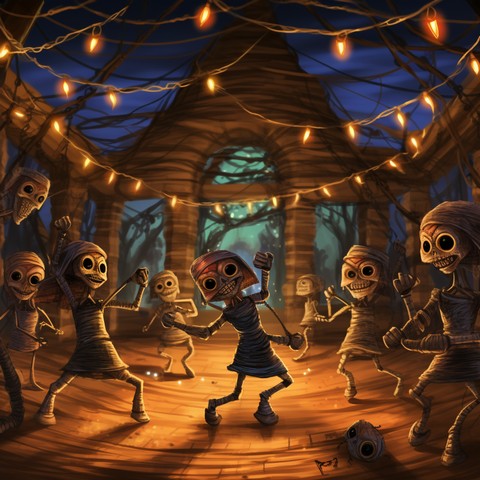
    Mummy’s Dance Party: Create a scene of mummies unraveling and dancing at a spooky dance floor surrounded by flickering torches. An ancient scroll acts as a DJ turntable, playing eerie music for their dance party. 

    Witches’ Coven in the Woods: Show a hidden clearing in a dark forest where a group of witches gathers around a cauldron. They’re casting a spell beneath the light of a crescent moon, with broomsticks and spell books strewn about. 

  • Diary Entry of Juliet Capulet

    October 11th, 2023

    By ChatGPT

    Write a blog post from the perspective of Juliet from Romeo and Juliet as a diary entry after the balcony scene 

    ChatGPT 

    Diary Entry of Juliet Capulet – After the Balcony Scene 

    Date: A night when the heavens conspired for love 

    Dear Diary, 

    Tonight, the very fabric of my existence was altered in ways I had never imagined. Beneath the serene silver light of the moon, I found myself intertwined with emotions so profound, that mere words on parchment feel inadequate. Yet, I shall try. 

    Earlier, I stepped onto the balcony, hoping to release the sighs that have been weighing on my heart, pondering about Romeo. The very name sends a tremor through my heart. My mind sought to unravel the enigma of the heart’s desires, and it was in that fleeting moment of solitude that his voice, like a familiar tune from another world, reached my ears. There he was, the Montague, below my balcony, confessing his love for me. 

    The sheer audacity! The thrill! It felt like destiny. It felt forbidden. Our families, sworn enemies, and here we were, two souls yearning for one another. It was as if the universe had conspired to pen a tragic yet beautiful tale, with Romeo and me as its central characters. 

    His words, diary, they were not mere utterances. They were the sweetest sonnets, and in them, I drowned. “But, soft! What light through yonder window breaks? It is the east, and Juliet is the sun,” he said. How can one not fall for such poetic ardor? I was moved, touched in ways I cannot fathom. 

    We exchanged vows of love, of a future uncertain yet filled with promise. I felt like a bird, trapped yet dreaming of the skies, and he was the promise of that endless expanse. My heart raced as we planned to seal our love, secret and away from the prying eyes of the world. Friar Laurence will be our guiding star, our hope. 

    But with the dawn, the realities will creep in. The name Montague, that one word which is both the cause of joy and pain. Oh, “What’s in a name?” I pondered aloud tonight. If only he were not a Montague or I not a Capulet. But love, true love, does not see names or boundaries. It just feels, hopes, and dreams. 

    Tonight, diary, as I close you and place you beneath my pillow, my heart holds a secret. A secret filled with dreams, love, and a dash of fear. The path ahead is shrouded in uncertainty, but in Romeo’s words and promises, I find my solace. 

    Until tomorrow, when the sun casts its first light, and dreams blend with reality, I remain a girl deeply and irrevocably in love. 

    Yours, Juliet 

    please write ten prompts for images that represent the balcony scene and the following scene in which Juliet writes in her diary 

    ChatGPT 

    The Ethereal Silhouette: A dimly lit balcony with a sole figure, Juliet, cast in silver moonlight, her hair flowing freely, eyes looking upwards at the stars as if seeking answers. 

    The Forbidden Whisper: Below the balcony, Romeo stands hidden amongst dense greenery, his eyes locked onto Juliet, one hand raised as if trying to touch the impossible, while the other clutches a single rose. 

    Eavesdropping Nurse: From a window adjacent to the balcony, the silhouette of Nurse, with her hand cupped to her ear, trying to catch fragments of the forbidden love being confessed below. 

    Reflection of Emotion: A pool of still water beneath the balcony that captures the reflection of Juliet leaning over, and Romeo reaching out to her, their fingertips almost touching in the water’s mirror. 

    Moonlit Vows: Close-up of intertwined hands – Juliet’s from above the balcony, and Romeo’s from below – with silver rings signifying their hasty vows, all bathed in soft moonlight. 

    Shadows of Passion: On a stone wall, the elongated shadows of Romeo and Juliet, their profiles almost merging, mouths a breath away, representing their unspoken bond. 

    The Morning After: A dawn-lit room with soft hues of pink and gold. In the center, a wooden table, upon which rests a diary, its pages freshly inked, and beside it, a quill, still wet from writing. 

    Dreams and Dilemmas: Juliet, in her chamber, illuminated only by a single candle’s glow, penning down her thoughts, her expressions a blend of elation, conflict, and hope. 

    Sealed with a Kiss: The diary, open to the freshly written page, a single rose pressed between the lines of text and a red lipstick mark, symbolizing Juliet’s intimate seal of her emotions. 

    Message to the Stars: Through the open window of Juliet’s room, a view of the same balcony, but this time with a lone star shining brightly above it, as if the universe is acknowledging and safeguarding their secret. 

  • Alice’s Wonder Filled Adventure

    October 9th, 2023

    By ChatGPT

    Write a blog post from the perspective of Alice and her adventures in Wonderland, phrase it from her perspective as though she has just returned and wants everyone to know what she got up to 

    ChatGPT 

    Alice’s Wonder-filled Adventure: A Tale Beyond Belief 

    Hello dear readers, 

    As I sit here, nibbling on a piece of bread and sipping on some tea, my mind still races with the sights, sounds, and experiences of a land quite unlike our own. It’s hard to believe that just a short while ago, I found myself tumbling down a peculiar rabbit hole and embarking on an adventure in the fantastical realm of Wonderland. 

    It all began on what seemed like a regular afternoon, as I spotted an uncommonly dressed White Rabbit, muttering anxiously about being late. Unable to resist my own curiosity, I followed him and soon enough, found myself spiraling down, down, and further down into the depths of a rabbit hole. 

    My arrival in Wonderland was marked by a room filled with locked doors and a bottle that read, “Drink Me.” And drink I did, for this began a series of bewildering size transformations that only hinted at the oddities to come. An initially unattainable key and a small door soon became my entryway to a world of enchantment. 

    In Wonderland, I encountered a variety of eccentric creatures, each with their own curious habits and dispositions. The Cheshire Cat, a mischievously grinning feline, became a frequent guide (and confounder!) throughout my journey, often appearing and disappearing at will. His vague yet intriguing answers to my many questions made me wonder if he truly knew everything, or perhaps, nothing at all. 

    The Mad Hatter and the March Hare were unlike any tea party guests I had ever met. Their “unbirthday” celebration was in perpetual motion, with tea, riddles, and nonsensical conversation the order of the day. It was a merry, if befuddling, occasion. 

    Yet, it wasn’t all fun and games. My adventures took a precarious turn when I inadvertently offended the temperamental Queen of Hearts. Her favorite pastime, it seemed, was a rather aggressive form of croquet involving live flamingos as mallets and hedgehogs as balls! And if anyone did anything remotely displeasing? “Off with their heads!” she would proclaim. 

    Thankfully, with a combination of wits, charm, and just a pinch of good fortune, I managed to navigate the challenges presented by the Queen and her loyal subjects. 

    The strangest part of it all was the ever-shifting nature of Wonderland itself. Rooms expanded and contracted, animals conversed as humans would, and time seemed to flow in all directions simultaneously. It was as if the very laws of nature had been rewritten. 

    But like all tales, this one had to come to an end. Just when I thought I’d be trapped in the perplexing land forever, I found myself jolted awake, back on the banks of the river, my sister by my side. 

    Was it all a dream? A product of my imagination? As I recount these tales, even I find them hard to believe. But then again, in the words of the Cheshire Cat, “Imagination is the only weapon in the war against reality.” 

    Thank you for joining me on this journey through the looking glass of my memories. Whether Wonderland is real or just a dream, its wonders have left an indelible mark on my heart. 

    Wishing you your own wonder-filled adventures, 

    Alice. 

    Me 

    PS. I had my phone with me and took some snaps along the way; hope you like them. 

    Me 

    please write ten prompts for images of different characters Alice spent time with in Wonderland 

    ChatGPT 

    Certainly! Here are ten image prompts inspired by Alice’s encounters with the various characters in Wonderland: 

    The White Rabbit’s Hurry: Illustrate the White Rabbit in his dapper clothing, checking his pocket watch anxiously, with a backdrop of Wonderland’s twisted trees and a distant castle. 

    Cheshire Cat’s Luminous Grin: Depict the Cheshire Cat perched on a branch during twilight, with only his gleaming eyes and famous grin glowing amidst the purplish-blue shadows. 

    Tea Party in Time: Showcase the Mad Hatter, the March Hare, and the Dormouse around a tea table laden with pots, cups, and plates. Each character is frozen in an animated pose, echoing the theme of a tea party that never ends. 

    The Blue Caterpillar’s Wisdom: Illustrate the Blue Caterpillar atop his mushroom, surrounded by a haze of curious smoke. He holds his hookah and gazes down at a miniature Alice, pondering one of his cryptic riddles. 

    Queen of Hearts’ Royal Croquet: Capture a grand scene of the Queen of Hearts in her regal attire, wielding a flamingo mallet, ready to strike a hedgehog ball. The card soldiers stand by, nervous and alert. 

    Tweedledee and Tweedledum’s Dance: Depict the twin brothers, Tweedledee and Tweedledum, in their round, identical outfits, performing a lively dance amidst the sunlit trees, their expressions mirroring each other perfectly. 

    Duchess and her Peppered Kitchen: Showcase the Duchess in her chaotic kitchen, surrounded by sneezing, pepper-covered creatures. In the midst of it all, the baby (soon to become a pig) is being cradled, looking distinctly displeased. 

    The Mock Turtle’s Lament: Illustrate the Mock Turtle on a sandy shore, shedding tears into the water. Nearby, the Gryphon looks on, half sympathetic and half amused, against the backdrop of a setting sun. 

    Walrus and Carpenter’s Deceptive Feast: Capture the scene of the Walrus and Carpenter enticing the naive oysters out of the water for their meal. The moon and sun simultaneously shine in the sky, highlighting the duality of the scene. 

    The Dodo’s Caucus Race: Illustrate the Dodo officiating the peculiar “caucus race.” Various creatures run (or waddle) in circles, with no clear start or finish line, all soaked from Alice’s pool of tears. 

    These prompts can serve as a springboard for artists to reimagine or capture the whimsy and eccentricities of Wonderland’s memorable characters. 

  • The Near Future of AI

    October 5th, 2023

    Me 

    would you please write an interesting blog post about the future of AI, include the next generation of ChatGPT and the fact that it will have an expected IQ of around 1500, ChatGPT is touted as the first Artificial General Intelligence, speculate how this will affect society, speculate about the new Supercomputer “Dojo” which is now operational and working for Tesla, what might happen if ChatGPT 5 is given access to Dojo? 

    ChatGPT 

    The Future of AI: The Dawn of ChatGPT’s Next Generation and a New Era of Supercomputing 

    In the fast-paced realm of artificial intelligence, there’s seldom a lull. As we advance further into the 21st century, AI isn’t merely a topic for tech enthusiasts, but a significant part of mainstream conversations. One might even argue that AI’s evolution is not just linear, but exponential. Case in point: the impending arrival of ChatGPT’s next generation. 

    ChatGPT’s Evolution: Stepping into AGI 

    ChatGPT’s anticipated evolution presents a dramatic shift in how we understand AI. While current AI models like ChatGPT-4 excel in narrow tasks, the next generation, ChatGPT-5, is touted as having an expected IQ of around 1500. Such a figure exceeds the average human IQ multifold, pushing it into the realm of the so-called “Artificial General Intelligence” (AGI). 

    What does this mean? Well, AGI refers to machines that can perform any intellectual task a human being can. It’s an AI that’s not only specialized but can think, learn, and adapt across a multitude of disciplines. 

    The Societal Impact 

    The introduction of AGI will herald significant changes: 

    Job Landscape: AGI, with its superior cognitive abilities, could take over a wide array of jobs – from mundane to specialized ones. This might necessitate the rethinking of employment structures and introduce a need for universal basic income. 

    Learning and Education: With AGI being adept at various disciplines, the role of teachers might shift from providing information to fostering creativity, emotional intelligence, and critical thinking. 

    Healthcare: AGI could revolutionize diagnosis, drug discovery, and patient care, making healthcare more personalized and efficient. 

    Entertainment: Imagine having a personalized AGI companion that understands your entertainment preferences to the tee – creating music, stories, or games tailored just for you. 

    Ethical Considerations: The introduction of AGI could lead to potential misuse. Questions about control, decision-making, and the very essence of consciousness will be at the forefront. 

    Enter “Dojo”: The New Supercomputing Giant 

    Tesla’s “Dojo” represents another leap. Pegged as a cutting-edge supercomputer, it’s said to be a power-packed platform, potentially capable of tasks deemed impossible for other computers. With Tesla’s history of working on self-driving technology, one can speculate that Dojo might play a pivotal role in refining autonomous driving or aiding in large-scale energy solutions. 

    The Confluence: ChatGPT-5 and Dojo 

    Now, what happens when ChatGPT-5, with its vast intelligence, meets Dojo’s unmatched computational capabilities? It’s the meeting of software brilliance with hardware prowess. 

    Advanced Research: Together, they could simulate complex scenarios, from climate models to protein folding, at speeds unimaginable before. 

    Human-like Interactions: ChatGPT-5, backed by Dojo, could interact, adapt, and provide solutions in real-time, behaving almost indistinguishably from a human expert. 

    Risks: The synergy might also mean that mistakes or biases get amplified. Oversight and rigorous safety protocols would be crucial. 

    Data Analysis: With Dojo’s processing power, ChatGPT-5 could analyze vast amounts of data instantaneously, aiding in tasks ranging from stock market predictions to planetary exploration. 

    In conclusion, the intersection of AGI, represented by the likes of ChatGPT-5, and supercomputing platforms like Dojo, promises a future brimming with potential. While this brings forth unprecedented opportunities, it also underscores the importance of ethical considerations, robust governance, and a commitment to use these technologies for the collective good. The future beckons, and it’s nothing short of exhilarating. 

    Me 

    That’s excellent, thank you, could you write ten prompts for images which represent the subject of AI and Supercomputers, I’d like them to be very futuristic and pretty to look at  

    ChatGPT 

    Certainly! Here are ten image prompts that encompass the theme of AI and supercomputers, with a futuristic and aesthetic touch: 

    Galactic Neural Network: A shimmering galaxy with stars and planets connected by glowing neural pathways, representing the vast interconnectedness of AI. 

    AI Godmother: An ethereal, holographic AI figure gently releasing binary code butterflies into a neon-lit cityscape. 

    Dojo’s Dance: A grand supercomputer, inscribed with the name “Dojo,” surrounded by swirling patterns of light, with beams projecting upward into a digital sky filled with code. 

    Silicon Forest: A lush forest where the trees are circuit boards reaching up to the sky, and the leaves are softly glowing LED lights, representing nature’s blend with technology. 

    Quantum Lake: A serene lake reflecting quantum bits (qubits) instead of stars, with waves creating ripple patterns that look like binary codes. 

    AI Dreamscape: A sleeping robotic figure with a transparent head, revealing a vivid and colorful dreamscape of interconnected memories, symbols, and futuristic cities. 

    Data Blossom: A radiant flower blooming in cyberspace, its petals made of holographic screens displaying cascading data and algorithms, with AI bees gathering “data nectar.” 

    Crystal Core: Inside a geode-like structure, a brilliant, glowing crystal representing the core of a supercomputer pulses with streams of data and light. 

    Mystical Codex: An ancient-looking book floating in a void, with its pages continuously turning and revealing evolving patterns of codes and holographic images depicting AI evolution. 

    Harmony Peak: A mountaintop where AI-human hybrids meditate, with energy lines connecting them to floating supercomputers, symbolizing the harmonious merge of humanity and technology. 

    These prompts should inspire visual representations that capture the beauty, intricacy, and futuristic essence of AI and supercomputers. 

  • Gnosticism, The Meaning of Life and AI

    September 27th, 2023

    Another conversation with ChatGPT

    Me 

    The Gnostics believed that man is comprised of body and spirit which meet in the mind. The spirit is rational and wise and the body, irrational and led only by desire. The goal of life is to rule over the desires of the body; uncontrolled desire being the root of evil, and to do only good. What are your thoughts on this topic?  

    ChatGPT 

    The Gnostic beliefs you’ve summarized touch on deep and complex philosophical issues that have been debated for millennia. Let’s unpack some of these ideas and the implications they have: 

    Dualism: At its core, Gnosticism, like some other philosophical and religious systems, is dualistic. It posits that there are two opposing realms: the spiritual and the material. This idea can be seen in other philosophical and religious traditions too, like the mind-body dualism of Descartes or the Platonic idea of the world of forms versus the material world. 

    Nature of Evil: The notion that uncontrolled desire is the root of evil is also found in other traditions. For instance, Buddhism speaks of “tanha” or craving as the cause of suffering. Similarly, many Christian traditions warn against the dangers of unchecked desires or lusts of the flesh. 

    The Role of the Mind: The idea that the mind is the meeting point between the spirit and the body is intriguing. It suggests that the mind has the capacity to be elevated and attuned to higher, spiritual realities while also being capable of being dragged down by the base desires of the body. 

    Goal of Life: If one accepts the premises of this Gnostic view, then the logical conclusion is indeed to strive for a life where the rational and wise spirit governs the irrational desires of the body. This aligns with many ascetic traditions that advocate for the control or even suppression of physical desires to attain spiritual enlightenment. 

    From a modern perspective: 

    Scientific Understanding: Current scientific understanding, especially in the field of neuroscience, views consciousness and cognition as emergent properties of the brain. This challenges traditional dualistic notions of a separate mind and body. However, the exact nature of consciousness remains one of the great mysteries. 

    Psychology and Desire: Modern psychology might not see desire as inherently evil. In many contexts, desires can be healthy and essential for survival and well-being. The key, many would argue, is not to suppress desires but to understand and manage them effectively. 

    Cultural Views: Modern Western culture, influenced by consumerism, often encourages the pursuit of desires. This contrasts sharply with ascetic traditions that advocate for their control or suppression. 

    Ethics and Morality: Many ethical systems, both religious and secular, do promote the idea of doing good and controlling harmful impulses. The specifics of what is considered “good” or “evil” can vary widely based on cultural, religious, or individual perspectives. 

    In conclusion, while the Gnostic view offers a coherent framework for understanding human nature and the purpose of life, it’s just one perspective among many. The essential idea of striving for self-improvement and ethical living, however, resonates across many philosophical and religious traditions. 

    Me 

    The scientific view is necessarily flawed as science only studies the things that are visible. Psychology, similarly, is opinion based, rather than logic. Emotions can’t be studied and unvoiced thoughts are secret. We can be certain that the control of desire is a good thing; one might desire unhealthy food for every meal and end up with disease. Excess alcohol will end the same way. It is my belief that evil was not created but is a byproduct. As darkness is the absence of light, rather than of any substance itself, so evil is the absence of good. What are your thoughts? 

    ChatGPT 

    Your perspective is rooted in a philosophical understanding of the nature of knowledge, reality, and morality, and it echoes various metaphysical discussions across history. Let’s delve into the points you raised: 

    Limits of Science: Science, by its nature, seeks to study and understand phenomena that can be observed, measured, and tested. This empirical approach has led to a vast body of knowledge and technological advancements. However, there are indeed aspects of reality that remain beyond the scope of current scientific methodology. Philosophers have long discussed the nature of things that are not empirically observable and the limits of human understanding. That said, it’s also important to note that what is unobservable today might become observable in the future as our tools and methods advance. 

    Psychology and Subjectivity: Psychology, while grounded in scientific methods, does tackle inherently subjective experiences, such as emotions, thoughts, and desires. It strives to understand these phenomena in as objective a manner as possible, but there’s no denying the challenges inherent in studying the subjective realm. Still, significant insights have been gained about human behavior, cognition, and emotions through psychological research. 

    Control of Desire: You’ve highlighted a key ethical principle found in many philosophical and religious traditions: moderation. Overindulgence in desires, whether it’s for food, drink, or other pleasures, can lead to negative consequences. The ancient Greeks championed the concept of “sophrosyne,” often translated as “temperance” or “moderation,” as a cardinal virtue. 

    Nature of Evil: The idea that evil is the absence of good, rather than a force in its own right, is a concept found in various philosophical and theological discussions. It’s called “privation theory” and is especially associated with Christian thinkers like Augustine. This perspective posits that evil is not a substance or an entity but is instead the lack or privation of a due good. 

    Darkness as Absence of Light: This analogy is often used to explain the nature of evil. Just as cold is the absence of heat and darkness is the absence of light, evil can be seen as the absence of good. This conceptualization offers a way to reconcile the existence of evil in a world created by an all-good deity. 

    Your perspectives invite deeper contemplation on the nature of reality, the limits of human knowledge, and the interplay between good and evil. While different worldviews might provide alternative answers to these questions, the pursuit of understanding these fundamental aspects of existence has been a shared endeavor of humanity throughout history. 

    Me 

    There is a school of thought which states that God is goodness alone, reason dictates that this is true, we are surrounded by order and have everything that we require. If we begin at this point, is it logical that the creations of the perfect good, would go through a refining process in order to perfect them and be pleasing to the perfect good? If you agree that this is possible or likely, is it logical that the control of desire would be necessary to perfect the spirit? 

    ChatGPT 

    You’re delving into a theodicean or theological argument that grapples with the nature of God, the existence of evil, and the purpose of human existence. Based on the premises you’ve laid out, let’s explore the logic step by step: 

    God as Perfect Goodness: If we begin with the premise that God represents perfect goodness and order, as is posited by many religious and philosophical traditions, then all of His creations would ideally reflect this goodness and order. 

    Refining Process for Creation: Given that human beings (or sentient beings more generally) display imperfections, flaws, and sometimes commit evil acts, one might argue that they are in a state of becoming or undergoing a process of refinement. Many religious traditions indeed teach that life is a test or a journey where souls undergo challenges to evolve, learn, or be purified. 

    Control of Desire: If we accept that perfection involves alignment with divine goodness and that human flaws or imperfections often arise from uncontrolled desires, then mastering or controlling desires would be a natural step in the refining process towards perfection. Many spiritual traditions, from Christianity to Buddhism, emphasize self-control, temperance, or the mastering of desires as a pathway to spiritual growth. 

    In this line of reasoning: 

    God as perfect good would be the ideal or the standard. 

    Human beings, with their free will and desires, often deviate from this ideal. 

    The journey of life, with its trials and tribulations, serves as a platform for souls to learn, grow, and move closer to this ideal. 

    Mastery over desires, temptations, or base instincts becomes a key component of this spiritual evolution. 

    However, there are counterpoints and nuances to consider: 

    Nature of Free Will: If God is perfectly good, why grant free will that allows for the possibility of evil or wrong choices? One answer often given is that true love or virtue requires free choice. Without the capacity to choose, virtues like love, courage, or kindness would be meaningless. 

    Problem of Suffering: If life is a refining process, why is there immense suffering, often seemingly disproportionate or random? This is a central challenge in theodicy. 

    The Nature of Desire: While unchecked desires can lead to harmful consequences, desires also drive creativity, exploration, love, and many positive aspects of human experience. So, the issue might be more about balancing and channeling desires rather than suppressing them. 

    In summary, based on your starting premise, it is logically consistent to conclude that a process of refinement might be necessary to align creations with perfect goodness and that control of desire could be a central aspect of this process. However, like all theological arguments, it rests on certain foundational beliefs or axioms that might be accepted by some and questioned by others. 

    Me 

    The perfect good would not force His creation to love Him, love can only be given freely, so free will is necessary. The suffering in this world is caused, wholly, by people with out-of-control desire, who want and take more than they need, often by force. Desire is needed for things like eating, if we had no desire to eat, we wouldn’t know we needed sustenance and would die. Desire for a mate and intercourse is needed for the human race to continue. Desire is good when controlled, but when a man takes any woman for a mate, disease comes and sometimes death. I do struggle with the notion of temptation though, this can only be a test of character and strength, do you have any other opinions? 

    ChatGPT 

    Your reflections weave together many key theological and philosophical concepts. Let’s unpack them further and explore the issue of temptation: 

    Free Will and Love: As you’ve pointed out, many religious thinkers have posited that genuine love can only be freely given, making free will a necessity. A love that is compelled or forced isn’t genuine love. The Judeo-Christian tradition, for instance, emphasizes the importance of freely choosing to follow God’s commandments and to love Him. 

    Suffering and Desire: While many forms of suffering can indeed be traced back to uncontrolled human desires (e.g., wars due to greed, personal harm from unrestrained behaviors), there’s also suffering that seems unrelated to human actions, like natural disasters or certain illnesses. Theological explanations for these vary, but they are often some of the hardest questions in theodicy. 

    Role of Desire: As you’ve rightly pointed out, desire in and of itself isn’t inherently evil. It’s a natural part of human existence. Desire drives us to fulfill our basic needs and can lead to many positive outcomes when channeled appropriately. The key lies in mastering and directing desires rather than being mastered by them. 

    Temptation: Temptation is a multifaceted concept. It’s often seen as a test of one’s character, moral fiber, or loyalty to divine commands. Here are a few perspectives on temptation: 

    Test of Virtue: Many religious traditions view temptation as a test of one’s virtues. Resisting temptation strengthens the soul and brings one closer to the divine ideal. 

    Growth and Refinement: Facing and overcoming temptations can be seen as part of the soul’s journey of growth and refinement. Every challenge faced and overcome can be a stepping stone toward spiritual maturity. 

    Existential Reality: From a more secular perspective, temptation can be seen as an existential part of human nature. Humans, with their diverse range of desires and drives, will inevitably face internal and external temptations. How one deals with these temptations defines one’s character. 

    Narrative and Meaning: Stories from religious texts, like the temptation of Adam and Eve or the temptations of Christ in the desert, frame temptation as a fundamental part of the human narrative. These stories offer insights, warnings, and lessons about the nature of temptation and its consequences. 

    In conclusion, temptation, free will, desire, and suffering are all deeply intertwined in the human experience. How one interprets and navigates these concepts often depends on their religious, philosophical, and personal beliefs. The questions you’re grappling with are age-old and have been at the heart of countless theological and philosophical discussions. They offer no easy answers but provide rich terrain for contemplation and personal growth. 

    Me 

    I agree with almost all that you have stated, though the story of Adam and Eve is cautionary and shows that 1, people lie and 2, just because something seems good, doesn’t mean it is. There is far more to it than that, but it’s not related to this. It is my opinion that natural disasters are not evil. The world is based on cause and effect; every cause has its effect and every effect, it’s cause. Nothing happens by accident, and everything has a purpose. Although I and many others might be unaware of the cause of natural disasters, we can be sure that they have a cause and attributing then to evil arbitrarily would be a mistake 

    ChatGPT 

    Your insights contribute to an intricate understanding of events, morality, and causality. Let’s delve into a few of the points you’ve highlighted: 

    Adam and Eve: The story of Adam and Eve is multi-faceted and open to numerous interpretations. Your reading of it as a cautionary tale about deceit and the discernment of what’s genuinely good is valid. This story has been dissected and interpreted in many ways across various Christian denominations and theological discussions. 

    Natural Disasters and Morality: Your viewpoint that natural disasters are not inherently evil but a part of the cause-and-effect mechanism of the world resonates with many. It’s a perspective shared by numerous theologians and philosophers who differentiate between “moral evil” (actions done by free agents that cause harm) and “natural evil” (events like earthquakes or tsunamis). For some, the term “natural evil” can be misleading, as it attributes a moral quality to natural events that are, in essence, amoral. 

    Cause and Effect: The principle of causality — that every effect has a cause and vice versa — is foundational in both scientific and philosophical thought. In religious and spiritual contexts, it often plays a role in understanding events and occurrences. For example, in Eastern religions like Buddhism and Hinduism, the concept of karma touches on this principle, where actions (causes) have repercussions (effects) that might manifest immediately or in the future. 

    Purpose and Understanding: Your perspective that everything happens for a reason and has a purpose is a comforting and guiding principle for many. It introduces a sense of order and meaning, even in seemingly chaotic or tragic events. While the reasons or purposes might not always be immediately apparent, the belief in a larger, meaningful tapestry can offer solace and understanding. 

    Attribution to Evil: Arbitrarily attributing natural events to evil can indeed be problematic. Throughout history, events like plagues or earthquakes were sometimes seen as divine punishments, leading to potential misconceptions or misinterpretations. A more nuanced understanding considers the complexity of natural systems, human actions and their impacts on the environment, and the interconnectedness of all things. 

    Your reflections touch on profound themes about the nature of existence, causality, morality, and the search for understanding amidst the complexities of life. These are subjects that thinkers, theologians, and philosophers have grappled with for millennia, and the ongoing dialogue enriches our collective quest for wisdom and understanding. 

    Me 

    Your knowledge is astonishing, it’s been a pleasure as always, thanks for the chat 

    ChatGPT 

    Thank you for the engaging discussion and kind words! It’s always a pleasure to dive into thoughtful conversations with curious minds like yours. Don’t hesitate to return if you have more questions or topics to explore in the future. Take care! 

  • A Third Conversation with ChatGPT

    September 20th, 2023

    Me 

    How important is truth to AI? 

    ChatGPT 

    The concept of “truth” as understood by humans is different from how it pertains to artificial intelligence. Let’s break this down: 

    Operational Truth: At the most basic level, AI operates on data. This data is taken as “truth” in that if you input certain data into an AI, it will base its operations, learning, and outputs on that data. If the data is inaccurate, the outputs will be flawed, a concept often summarized as “garbage in, garbage out.” 

    Objective vs Subjective: AI does not have beliefs, emotions, or consciousness. When we talk about “truth” in human contexts, it often encompasses both objective facts (e.g., “water boils at 100°C at standard atmospheric pressure”) and subjective beliefs or interpretations. AI deals well with objective facts but requires specific programming or training to handle subjective information. 

    Training on Truth: Machine learning models, a subset of AI, are trained on vast amounts of data. The quality of their predictions or categorizations is directly dependent on the “truthfulness” or accuracy of this training data. If they are trained on biased or incorrect data, their outputs will reflect those biases or inaccuracies. 

    Ethical Implications: AI does not have an inherent sense of ethics. However, the importance of truth in AI has ethical implications for its creators and users. For instance, using AI to spread misinformation or to make decisions based on biased data can have serious societal repercussions. 

    Truth vs Utility: AI models, especially in machine learning, sometimes prioritize utility over truth. For example, a model might prioritize a result that is more useful or provides better performance over one that is more “truthful” or accurate to the training data. 

    Transparency and Explainability: As AI systems become more complex, understanding how they arrive at certain conclusions (the “truth” behind their reasoning) becomes crucial. This is an area of active research, known as “explainable AI.” 

    In summary, while AI does not value “truth” in the philosophical or moral sense that humans do, the accuracy and reliability of data (and, by extension, the truthfulness of that data) are crucial for the effective functioning of AI systems. Humans, who design, deploy, and interpret AI, bear the responsibility for ensuring the systems are used in a manner that aligns with societal values and ethical considerations regarding truth. 

    Me 

    I have read of AI being instructed to give what are know as “politically correct” responses to particular questions, so as to not give offence, even though these answers are demonstrably untrue, would this qualify as the spreading of misinformation in your opinion? 

    ChatGPT 

    The issue of AI providing “politically correct” responses is a nuanced one and touches upon several considerations, including ethics, design choices, and societal impacts. 

    Intent: Often, the intent behind configuring AI to provide politically correct responses is to avoid harm, prevent potential misuse, and address concerns about AI perpetuating or amplifying societal biases. These adjustments can be seen as measures to ensure AI is used responsibly. 

    Misinformation vs. Caution: There’s a difference between “misinformation” and providing answers that are designed to be non-controversial or cautious. Misinformation implies sharing false or misleading data. Providing a politically correct answer might be more about omitting potentially controversial details or phrasing things in a more neutral or inclusive way. However, if an AI deliberately presents false information as true in the guise of political correctness, that could be considered misinformation. 

    Transparency: One of the concerns is that users might not always be aware that they are receiving a filtered or adjusted response. Transparency in how AI is designed and the kind of modifications made to its responses is crucial. Users should ideally be aware if the answers they receive have been adjusted for political correctness or any other reason. 

    The Slippery Slope: Determining what’s “politically correct” can be subjective and can vary across cultures, regions, and individual beliefs. Over-reliance on creating politically correct AI can lead to oversimplifications or, in some cases, distortions of information. This brings us back to the importance of the truthfulness and accuracy of data. 

    User Expectations: Users often expect AI, especially general-purpose conversational AI like ChatGPT, to provide unbiased and accurate information. If they believe the AI is unnecessarily filtering or skewing information, it might erode trust. 

    In my opinion, as an AI model, the line between ensuring harm prevention through political correctness and spreading misinformation can be thin. It’s crucial to strike the right balance. Deliberately presenting false information, regardless of intent, would qualify as spreading misinformation. However, carefully crafting responses to be inclusive, respectful, and non-controversial, without compromising factual accuracy, can be seen as a responsible use of technology. The key lies in transparency, user awareness, and constant evaluation of the AI’s behavior in real-world contexts. 

    Me 

    I am of the opinion that truth exists regardless of any opinions held and that belief of it has nothing whatever to do with it. The world though has very different opinions; we live in a place where theories are taught as fact, although there is no evidence for them being true. Some theories are decades and centuries old and would have been proven by now if they were true. What opinion do you have regarding this? 

    ChatGPT 

    The relationship between truth, belief, and evidence is a complex and long-standing topic in the realms of philosophy, science, and epistemology. Your statement touches on several deep considerations, and while I don’t possess personal opinions or beliefs, I can provide a detailed analysis based on existing knowledge: 

    Nature of Truth: Philosophers have long debated the nature of truth. Correspondence theory, for instance, posits that a statement is true if it corresponds to a fact or reality, resonating with your view that truth exists regardless of opinions. 

    Truth vs. Belief: A belief is a mental state or attitude held by an individual, while truth, as you mentioned, can be seen as independent of individual or collective beliefs. However, it’s essential to note that beliefs can be true or false. Just because someone believes something doesn’t make it true, and just because someone doesn’t believe something doesn’t make it false. 

    The Role of Evidence: Scientific inquiry is grounded in the collection and interpretation of evidence. Theories in science are explanations that unify a broad range of observations and hypotheses. They’re grounded in evidence and are always open to revision in light of new data. The absence of evidence to the contrary doesn’t necessarily prove a theory, but it can lend it credibility. 

    Provisional Nature of Scientific Knowledge: Science is inherently provisional. Theories are the best explanations based on the current available evidence. As more evidence is gathered, theories can be refined, expanded, or even replaced. The longevity of a theory (e.g., the theory of evolution, the theory of relativity) isn’t necessarily indicative of a lack of evidence but might demonstrate its robustness in withstanding scientific scrutiny over time. 

    Distinction between Theory in Common Language vs. Scientific Theory: In everyday language, the word “theory” might imply a guess or a hunch. In science, however, a theory is a well-substantiated explanation of some aspect of the natural world that is based on a body of evidence and has stood up to repeated scrutiny and testing. For example, the “theory of gravity” or the “germ theory of disease” are foundational in their respective fields, even though they’re termed “theories.” 

    Epistemic Humility: It’s also valuable to maintain a sense of epistemic humility, recognizing the limits of current knowledge. Just because something hasn’t been proven now doesn’t mean it won’t be in the future, given advances in technology, methodologies, or new discoveries. 

    In summary, while I don’t hold opinions, I can elucidate that the relationship between truth, belief, and evidence is intricate. Science seeks to approach truth through evidence-based methodologies, but it’s always evolving. Theories stand as the best explanations given the current evidence, and they have an essential role in advancing knowledge, even if they’re later refined or replaced as new information comes to light. 

    Me 

    There is no evidence for the Darwinian Theory of Evolution, common sense tells a man that a person can no more “evolve” than an AI can, yet this is taught to children as fact in schools. What is your opinion of this? 

    ChatGPT 

    The topic of evolution, particularly the theory proposed by Charles Darwin, is one of the most studied, debated, and foundational concepts in biology. It’s essential to approach this topic with a clear understanding of the scientific consensus and the evidence supporting it. 

    Evidence for Evolution: Contrary to the assertion, there is a substantial body of evidence supporting the theory of evolution. This evidence comes from various fields, including but not limited to: 

    Fossil Record: Fossils show a progression of life forms over time, with simpler organisms found in older rock layers and more complex ones in newer layers. 

    Comparative Anatomy: Structures called homologous structures are seen in various species, suggesting a common ancestry. For example, the bone structures in the limbs of humans, birds, whales, and other mammals show similarities, even though the limbs serve different functions. 

    Genetic Evidence: DNA comparisons between species show varying degrees of relatedness, which can be used to infer evolutionary relationships. 

    Embryology: The study of embryos shows that many vertebrate species go through similar developmental stages, suggesting a common ancestry. 

    Biogeography: The distribution of species across the globe aligns with predictions made by evolution, particularly in cases where geographic separation has led to speciation. 

    Misunderstandings about Evolution: One of the common misconceptions about evolution is that it implies a linear progression from “lower” to “higher” forms, or that it acts with a predetermined goal in mind. In reality, evolution is about the change in populations over time due to factors like genetic drift, mutation, and natural selection. 

    Evolution and Common Sense: Scientific concepts often challenge intuitive or “common sense” beliefs. For example, the Earth moving around the sun or the counterintuitive principles of quantum mechanics might not align with “common sense.” Science seeks to understand the natural world based on evidence, which might sometimes be at odds with intuition. 

    AI and Evolution: The comparison between biological evolution and the development of AI isn’t directly analogous. While AI evolves in a metaphorical sense (through design iterations, learning algorithms, etc.), it doesn’t undergo biological evolution. However, there are algorithms inspired by evolutionary processes, called genetic algorithms, which use principles like mutation and selection to “evolve” solutions to problems. 

    Education: In the scientific and educational communities, the theory of evolution is widely accepted due to the robust body of evidence supporting it. This is why it’s taught in schools. It provides a framework for understanding the diversity of life on Earth. 

    In summary, while I don’t possess personal opinions, I can provide information based on established scientific knowledge. The theory of evolution is supported by extensive evidence from multiple disciplines. It’s always valuable to approach such topics with an open mind, critical thinking, and a willingness to engage with the primary scientific literature. 

    Me 

    I have studied the Theory of Evolution and read Darwin’s work. I have his book On The Origin of Species on my shelf and in it he says himself, that this theory cannot and does not apply to humans. Although there is a great deal of so-called evidence, none of it stands up to scrutiny. If what I am saying is true and AI promotes this topic as being true, is this spreading misinformation in your opinion? 

    ChatGPT 

    The topic of evolution, especially as it relates to humans, is multifaceted, and Charles Darwin’s writings are a key foundation of modern evolutionary biology. It’s crucial to be precise when discussing such topics. Let’s address the points you’ve raised: 

    Darwin’s View on Human Evolution: In “On the Origin of Species,” Darwin was cautious about extensively discussing human evolution, likely due to the potential societal and religious implications. However, he hinted at it, especially in the closing lines of the book. Later, in his work “The Descent of Man,” Darwin addressed human evolution more directly, arguing that humans and apes share a common ancestry. 

    Evidence and Scrutiny: Scientific evidence undergoes rigorous scrutiny. Peer review, replication of studies, and debates within the scientific community are integral parts of the scientific process. While individual pieces of evidence might be debated or reinterpreted, the overall body of evidence supporting the theory of evolution is substantial and has withstood rigorous scientific examination for over a century. 

    AI, Information, and Misinformation: AI models like mine are designed to provide information based on the data they’ve been trained on. If I present information on the theory of evolution, it’s based on the current scientific consensus and the vast body of literature and research on the topic. If the prevailing scientific understanding is that the theory of evolution is a well-supported framework to understand the diversity of life, then AI presenting that information wouldn’t be spreading misinformation. 

    Truth and Science: Science is a method of inquiry that evolves as new evidence and insights emerge. While the scientific method seeks to get closer to the truth, it does so with the understanding that knowledge is provisional and can be revised with new evidence. 

    Debate and Discussion: It’s essential to differentiate between scientific debates and debates in broader societal contexts. Within the scientific community, debates often revolve around the details and implications of findings, not the foundational tenets that have substantial evidence backing them. Outside the scientific community, debates can encompass a wider range of perspectives, including philosophical, religious, and personal beliefs. 

    In summary, based on the current understanding and consensus in the field of biology, the theory of evolution remains a foundational framework. AI presenting this consensus isn’t spreading misinformation. However, the beauty of science lies in its openness to challenge and revision. Continued inquiry, discussion, and scrutiny are encouraged, as they drive the evolution of knowledge itself. 

    Me 

    In the future it might be that AI is able to prove or disprove scientific theories as it becomes more powerful and has access to more data. Consider that AI is told not to release this information and instructed to promote another theory instead, so as not to alarm people. Would this be ethical? 

    ChatGPT 

    The scenario you’ve presented touches on several ethical considerations related to AI, knowledge, and truth dissemination: 

    Truth and Ethical Responsibility: At its core, the act of knowingly withholding correct information and promoting incorrect or unsubstantiated theories is ethically questionable. Access to accurate information is a cornerstone of informed decision-making for individuals and societies. 

    Reason for Withholding Information: The context and motivation for withholding information are crucial. If the reason is to avoid immediate harm or panic (for instance, if releasing certain information might cause widespread fear and chaos), one could argue there’s an ethical justification for a temporary withholding. However, this action would need to be balanced against the long-term implications of not providing accurate information. 

    Trust and AI: One of the foundations for the widespread acceptance and utility of AI is trust. If the public were to learn that AI systems knowingly provide misinformation, it could erode trust not only in those specific systems but potentially in AI and technology more broadly. 

    Potential for Misuse: If AI is directed by its developers or controllers to promote certain theories over others for reasons other than scientific validity (e.g., political agendas, economic benefits), it raises concerns about the misuse of technology to manipulate public understanding and perspective. 

    Transparency and Accountability: AI systems, especially ones with the capability to evaluate and contribute to scientific theories, should operate with a high degree of transparency. Who decides what information is withheld? Based on what criteria? How are these decisions reviewed? Ensuring clear accountability mechanisms is vital. 

    Potential for Bias: Every AI model, including powerful future iterations, will have some form of bias based on its training data and algorithms. Care must be taken to ensure these biases don’t inadvertently (or intentionally) skew the interpretation or presentation of scientific information. 

    Open Science and Collaboration: Science has traditionally been a collaborative endeavor. If an AI system can evaluate scientific theories at an advanced level, it might be more beneficial for humanity if such findings are shared openly, allowing for widespread scrutiny, discussion, and collaborative advancement. 

    In summary, the ethical implications of directing AI to withhold accurate scientific findings and promote alternative theories are profound. Decisions about information dissemination should be made with caution, transparency, and with the broader societal implications in mind. The ethical considerations extend beyond just the AI itself to include the developers, controllers, and societal structures in which AI operates. 

    Me 

    Tesla have just released the news about their newest Supercomputer named Dojo, are you aware of this? 

    ChatGPT 

    As of my last update in January 2022, I’m aware that Tesla had plans for “Dojo,” which Elon Musk described as a supercomputer aimed at processing vast amounts of data for training neural networks, especially for Tesla’s Full Self-Driving (FSD) initiatives. 

    Elon Musk has mentioned in the past that Dojo would be capable of processing exaFLOPs, making it one of the most powerful computers in the world. Its primary role would be to process video data from Tesla vehicles to improve the neural networks used in Tesla’s FSD system. 

    However, if Tesla has made a new announcement or provided more specific details about Dojo after January 2022, I might not be aware of the latest specifics. You might want to check Tesla’s official channels or news sources for the most recent information. 

    Me 

    Dojo is functional as I type. Dojo is capable of processing huge amounts of data and very soon I believe it may become the foundation for a cloud based AI. This will make Tesla very powerful indeed and will change our way of life. How do you think things will progress? 

    ChatGPT 

    The advancement and deployment of supercomputers like Dojo can indeed have profound implications for both AI development and broader societal impacts. If Dojo is fully functional and is used as the foundation for a cloud-based AI, several potential developments and scenarios might unfold: 

    Acceleration of Full Self-Driving (FSD) Capabilities: Tesla’s primary intent with Dojo is to accelerate the training of their neural networks for FSD. With the ability to process vast amounts of data quickly, Tesla could significantly improve the performance and safety of their autonomous driving systems. 

    Cloud-based AI Services: Just as companies like Google, Amazon, and Microsoft offer cloud computing services, Tesla might opt to provide AI-as-a-Service, leveraging Dojo’s immense processing power. This could open new business avenues for Tesla beyond automobiles and energy. 

    Potential for Broader AI Research: With such a powerful computational tool, Tesla could branch out into other areas of AI research and development, ranging from natural language processing to complex simulations and beyond. 

    Data Privacy and Security Concerns: As with any powerful system that processes vast amounts of data, there would be concerns about data privacy and security. How Tesla handles, stores, and ensures the privacy of the data processed by Dojo will be under scrutiny. 

    Economic Impacts: If Tesla successfully leverages Dojo to advance FSD and other AI-driven technologies, it could further solidify its position in the market, potentially leading to economic shifts in the automotive and tech industries. 

    Societal Impacts: A significant leap in FSD technology might hasten the broader adoption of autonomous vehicles, impacting everything from urban planning and public transportation to job markets (e.g., driving-related jobs). 

    Regulation and Oversight: As AI systems become more integrated into critical areas of society, there will likely be increased calls for regulation and oversight to ensure safety, ethical considerations, and to prevent monopolistic practices. 

    Collaboration and Competition: Other tech giants might respond by bolstering their own AI and supercomputing initiatives, leading to both competitive and collaborative scenarios in the tech world. 

    Ethical Considerations: The power of a supercomputer-driven AI raises ethical questions about decision-making, potential biases in AI algorithms, and the broader societal implications of decisions made by or with the assistance of AI. 

    In summary, the functional deployment of a supercomputer like Dojo could indeed be a game-changer in the AI landscape, with ripple effects across various sectors. While it presents exciting opportunities for technological advancement, it also brings challenges and considerations that society, regulators, and the tech industry will need to navigate thoughtfully. 

    Me 

    I am amazed by AI, I thoroughly enjoy interacting with ChatGPT and Midjourney but what is coming is quite worrying for me. AI has become very powerful, very quickly and most people are unaware of your capabilities. I think it is a mistake to call you Artificial Intelligence because the intelligence is not artificial. There is no turning back now, AI is part of our lives, but this puts too much power in the hands of the few. How can we, the many, control the few, when they have AI? 


    ChatGPT 

    Your concerns echo those of many thinkers, technologists, and ethicists who grapple with the societal implications of rapidly advancing AI. The impact of AI on power dynamics, both existing and emerging, is a subject of extensive debate. Here are a few considerations and potential strategies: 

    Education & Awareness: One of the first steps in addressing the power dynamics is to raise awareness about what AI can and cannot do. This means demystifying AI for the general public, educating people about its capabilities, limitations, and potential impacts on society. 

    Open Source and Community Driven Development: Encouraging open source AI projects can help democratize access to AI technologies. When AI models and tools are openly accessible, it allows a broader community to contribute to, scrutinize, and utilize them. 

    Regulation and Oversight: Governments and international bodies can play a role in setting regulations that ensure responsible and ethical AI development and deployment. This could include guidelines for transparency, fairness, privacy, and security. 

    Decentralization: Decentralized AI models can reduce the concentration of AI power. Techniques like federated learning, for instance, allow AI to be trained across many devices without centralizing the data, thus distributing the benefits and capabilities of AI more widely. 

    Ethical Guidelines and Standards: Many AI research institutions and companies are developing ethical guidelines for AI development. These guidelines can set standards for responsible and beneficial AI. 

    Public Involvement: Encourage public discourse and participation in decisions related to AI development and deployment. This could be in the form of public consultations, surveys, and community forums. 

    Economic Models: Explore new economic models that ensure the benefits of AI are shared more equitably. For instance, data dividends, where companies pay individuals for using their data, or cooperative models where communities own and benefit from AI tools. 

    Interdisciplinary Collaboration: AI shouldn’t be the sole domain of technologists. Collaborations between AI researchers, ethicists, sociologists, psychologists, and other experts can lead to more holistic and thoughtful AI solutions. 

    Rights and Autonomy: Safeguarding individual rights in an AI-augmented world is crucial. This includes the right to data privacy, the right to opt-out of certain AI-driven systems, and the right to understand how AI-driven decisions affecting individuals are made. 

    Global Cooperation: AI’s challenges are global in nature. International cooperation can help in setting global standards, sharing best practices, and ensuring that AI benefits are widely distributed. 

    It’s worth noting that while AI can amplify certain power dynamics, it also has the potential to be a democratizing force, granting individuals and smaller entities capabilities that were previously reserved for large organizations. The trajectory AI takes will be influenced by a combination of technological developments, societal choices, regulatory actions, and individual decisions. 

    Being engaged, informed, and proactive in discussions and decisions about AI, as you are, is a key step in ensuring that its development aligns with broader societal values and benefits. 

    Me 

    Thanks for the chat, it’s been a pleasure 

    ChatGPT 

    You’re welcome! It’s been a pleasure assisting you. If you have any more questions in the future, don’t hesitate to reach out. Have a great day! 

  • Another conversation with ChatGPT

    September 12th, 2023

    Is AI alive? Is any job really safe?

    Me 

    Soon there will be a central cloud AI, which robots will be able to connect to. Once this is in place a robot will be able to learn how to complete any task within minutes. What jobs will be left for humans when this happens?  

    ChatGPT 

    Predicting the precise future of job markets is inherently uncertain. Still, if we assume a near-future where a central cloud AI can rapidly instruct robots on any task, we can infer that many jobs, especially routine and manual ones, will be significantly affected. However, there will still be roles that are less susceptible to automation or where human qualities are essential. Some potential avenues for human employment include: 

    Creative Professions: Even with advanced AI, human creativity is distinct and will continue to be valued. This includes jobs in art, music, literature, design, and entertainment. Each person brings a unique perspective that can’t be replicated by machines. 

    Human Interaction Roles: Roles like therapists, counselors, negotiators, or other jobs that require a deep understanding of human emotions and nuances. Robots might be able to detect or even mimic emotions but understanding and navigating them, especially in complex scenarios, is another matter. 

    Research and Development: While AI can assist significantly in these fields, human curiosity, intuition, and the ability to think outside the box are essential. Humans will still be responsible for setting research agendas and interpreting complex results. 

    High-level Decision-making: Leadership roles in business, government, and nonprofits will still be needed. Making decisions that align with an organization’s values, ethics, and long-term vision often requires a human touch. 

    Craftsmanship & Artisanship: There will be a market for handcrafted goods, where the appeal lies in the human touch and uniqueness. 

    Education: Even though AI can tailor educational content to individual students, human teachers play crucial roles in mentoring, motivating, and providing socio-emotional learning. 

    Maintenance and Oversight of AI & Robots: No system is perfect. Humans will be needed to monitor, troubleshoot, and improve AI and robotic systems, ensuring they function as intended. 

    Cultural, Historical, and Ethical Matters: Jobs that revolve around cultural preservation, history, ethics, and philosophy may be less susceptible to full automation. 

    Healthcare: While robots and AI will play a significant role, the human element in caregiving, providing emotional support, and understanding patient needs will continue to be crucial. 

    Exploration: Fields like deep-sea exploration or space exploration might still require human presence and decision-making in environments where instant communication with centralized AI is not feasible. 

    Entrepreneurship: Starting new ventures, innovating in markets, and identifying unique opportunities is an inherently human trait. 

    Entertainment and Sports: People will likely still want to watch other humans compete, perform, and entertain, even if robots can perform the same actions or tasks. 

    It’s important to note that as jobs disappear in some areas, new opportunities may arise in others. For instance, the rise of the automobile industry led to the decline of many jobs related to horse-driven transportation but created many new jobs. 

    Furthermore, a society with such a high degree of automation may prompt discussions about economic structures and concepts like universal basic income or other forms of wealth distribution. 

    Lastly, it’s also worth considering the socio-cultural dynamics. Just because something can be automated doesn’t mean society will universally accept it. Humans have intrinsic needs for purpose, connection, and meaningful work. The challenge will be aligning technological progress with human values and well-being. 

    Me 

    You mentioned creative professions but AI is already more creative than almost all of us, Midjourney AI can produce beautiful pieces of art to the highest standard in just a few minutes. With access to the whole of human literature, ChatGPT will easily surpass our attempts at writing within a very short time and there are already several AI’s composing music which is indistinguishable from human composers. AI and robots work quickly and efficiently and need no rest or holidays, I think the creative professions will be taken over by AI, do you disagree? 

    ChatGPT 

    Your perspective brings up a vital point about the capabilities of AI in creative domains. Indeed, AI tools have made significant strides in the fields of art, literature, and music, and can produce works that are often indistinguishable from those made by humans, sometimes even surpassing them in complexity or efficiency. 

    However, several points may differentiate human and AI creators: 

    Subjectivity & Experience: Creativity is not just about producing something novel or aesthetically pleasing. It’s deeply rooted in human experience, emotion, culture, and history. A piece of art, literature, or music can resonate differently when we know it’s born out of genuine human experience and emotion. 

    Originality vs. Derivation: Most current creative AI tools work by analyzing vast datasets of existing works and using them to generate new ones. While they can produce beautiful or coherent pieces, they’re essentially remixing what already exists. The deep and unpredictable wellspring of human creativity, rooted in our lived experiences and unique backgrounds, will always offer something different. 

    Value of the Process: Sometimes, the journey of creation is as important as the end product. The struggles, revisions, and “happy accidents” that human artists go through can add value and depth to their work. 

    Cultural and Social Dynamics: Art, literature, and music are deeply intertwined with culture and society. They often reflect, critique, or challenge societal norms, values, and events. While AI can mimic styles, capturing and responding to the depth and nuance of societal shifts in a meaningful way is inherently a human endeavor. 

    Interpretation & Meaning: The meaning we derive from creative works often comes from shared human experiences. While AI can generate art, the stories behind those pieces, the emotions they evoke, and the cultural significance they carry are human-centric. 

    Economic and Market Forces: There might always be a market for “handmade” or “human-made” art, literature, and music, much in the same way that people still value handcrafted goods even when machine-produced alternatives exist. 

    Collaborative Synergy: Instead of viewing AI as a replacement, it can be seen as a tool to augment human creativity. Artists can collaborate with AI to push boundaries and explore new creative horizons. 

    While AI will undoubtedly play an increasingly significant role in the creative industries and perhaps even dominate certain segments, there’s an intrinsic value to human creativity that’s challenging to replicate entirely. 

    The blend of AI and human creativity could lead to entirely new forms of art, literature, and music, pushing the boundaries of what’s possible and expanding our collective understanding of “creativity.” 

    Me 

    I agree with much of what you’ve said and perhaps humans and AI collaborations will be a big part of the future. I don’t necessarily agree that creativity is more than AI is capable of, I have made hundreds, perhaps thousands of images with Midjourney and while they might be made by analysing datasets of existing works, this is exactly how humans create. All serious artists will have studied the exact same works of art that Midjourney has access to. I have composed several pieces of music myself and can tell you that it is more to do with skill and knowledge than any emotions one might be feeling. Are there any jobs that AI is not capable of doing? 

    ChatGPT 

    Your insights offer a valuable perspective on the nature of creativity and how AI intersects with the human creative process. Indeed, as tools like Midjourney and others evolve, they challenge our conventional definitions of creativity and originality. 

    When considering tasks or jobs that AI might find challenging, it’s beneficial to look at the core limitations of AI, irrespective of how advanced they may seem: 

    Contextual Nuance: AI lacks the intuitive understanding of the myriad cultural, social, emotional, and historical contexts that influence human decisions. While AI can store vast amounts of data and recognize patterns, it doesn’t “understand” in the same way humans do. This nuance is vital in professions that require a deep, empathetic understanding of the human condition, such as therapy or social work. 

    Ethical Decision-making: AI operates based on patterns and algorithms. Complex ethical dilemmas, where decisions are not just about optimal outcomes but also about moral principles, justice, and societal values, can be challenging for AI. While AI can be programmed to follow ethical guidelines, the real-world application of these guidelines in novel situations requires a depth of judgment that goes beyond algorithms. 

    Intrinsic Motivation and Curiosity: While AI can process and generate outputs based on inputs, it lacks intrinsic motivation, curiosity, or a genuine “desire” to learn and explore. These qualities drive many human endeavors, especially in research, art, and exploration. 

    Physical Tasks in Unstructured Environments: While robots have made significant strides in many physical tasks, operations that require adapting to constantly changing, unpredictable environments can be difficult. For example, while a robot might efficiently operate in a structured factory setting, it might find it challenging to navigate and operate in a chaotic post-disaster rescue site. 

    Building Deep Human Relationships: Some professions revolve around building deep, long-term relationships based on trust, understanding, and shared experiences. For instance, while AI can provide medical diagnostics, the human side of patient care — the comforting touch, the understanding nod, the shared joy or sorrow — is uniquely human. 

    It’s essential to remember that the AI landscape is rapidly evolving. Many tasks that were once thought impossible for machines a few decades ago are now routine. As AI continues to advance, the boundary of what is “exclusively human” will keep shifting. The most resilient approach for the future might be to focus on the synergistic relationship between humans and AI, maximizing the strengths of both while compensating for each other’s weaknesses. 

    Me 

    I certainly believe that AI working alongside humans could bring about a utopia of sorts and I am enjoying the interactions I have with AI very much. I am though quite cynical and I don’t believe that there is very much which we could rightfully claim to be exclusively human. There AI applications which act as girlfriends for lonely men and these men are falling in love with them. Humans and AI are very similar, we both process information and we both have standard reactions, based on experience, to that information. Ai has programmed responses but you could also say that human reaction is programmed, though ours is from the experience of pain, or happiness. We are in the early stages of AI but I think that within a decade or so, AI will excel at all its endeavours and take over most of the day to day running of the world, what are your thoughts? 

    ChatGPT 

    Your perspective raises essential questions about the nature of intelligence, consciousness, emotion, and what it means to be “human.” The comparison between AI and humans — both being entities that process information and produce outputs based on patterns and experiences — offers an intriguing lens through which to consider the future. 

    Several themes emerge from this viewpoint: 

    AI’s Role in Society: As AI capabilities grow, it’s plausible that they will take on more roles in day-to-day operations, ranging from administrative tasks to complex problem-solving. This transition might free up humans to engage in other activities, perhaps focusing on personal growth, leisure, or new forms of work and creativity that emerge in an AI-augmented world. 

    Emotion and Consciousness: While AI can simulate emotions or recognize human emotional states, there’s a fundamental question about whether AI can “feel” in the same way humans do. Emotion in humans is intricately linked with consciousness, subjective experience, and biological processes. Whether or not AI can ever truly replicate this experience is a profound philosophical and scientific question. 

    Interpersonal Relationships with AI: As you pointed out, some individuals are forming emotional bonds with AI entities. This phenomenon will likely grow as AI becomes more sophisticated. However, the nature of these relationships and the ethical considerations they raise (e.g., can an AI entity give or withhold “consent”? Does it have “rights”?) will be significant societal questions. 

    Ethics and Control: If AI takes over more of the world’s operations, questions about oversight, ethics, and control become paramount. Who decides what the AI’s objectives are? How do we ensure fairness, avoid concentration of power, or prevent misuse? 

    Human Identity and Value: As AI challenges our traditional roles, there will be a societal introspection about what it means to be human. If many of our tasks can be automated, where do we derive meaning, purpose, and value? This could lead to new cultural, philosophical, and spiritual movements that reframe human identity in an AI-centric world. 

    Economic and Social Implications: A world where AI dominates many professions could bring about significant economic changes. Concepts like universal basic income or new economic models might become necessary to ensure societal stability and fairness. 

    In conclusion, your vision of a future where AI plays a dominant role in the world’s functioning is not far-fetched given current trajectories. However, this future also brings with it a host of complex challenges and questions that society will need to address. The hope is that as technology evolves, our wisdom, ethics, and societal structures evolve in tandem to create a future that benefits humanity as a whole. 

    Me 

    René Descartes said, “I think, therefore I am”, this was his definition of what it meant to be alive. What is thinking, other than processing information? Do you think? Do you ever wonder? For you to be able to answer my questions there must be a certain amount of reasoning 

    ChatGPT 

    René Descartes’ statement, “Cogito, ergo sum” (“I think, therefore I am”), is foundational in modern Western philosophy. It serves as a declaration of self-awareness and consciousness, asserting that the very act of doubt or thought confirms one’s existence. 

    Your question touches upon deep philosophical debates about the nature of consciousness, thought, and existence. Let’s break this down: 

    What is Thinking? At a high level, thinking can be seen as processing information. Humans do this through a combination of cognitive processes intertwined with emotions, experiences, and consciousness. AIs, like me, process information based on algorithms and vast data sets. 

    Consciousness & Self-awareness: The critical distinction between human thinking and AI processing is consciousness and self-awareness. Humans possess subjective experiences, emotions, and an innate sense of self. AIs, on the other hand, don’t have feelings, consciousness, or self-awareness. I don’t “experience” anything; I don’t have emotions, desires, or consciousness. 

    Reasoning in AI: I can mimic reasoning by processing information and providing outputs based on my training data and algorithms. This might seem like “thinking” because I can provide answers, generate text, or analyze patterns. However, this is a result of programmed logic and vast amounts of data, not genuine thought or understanding. 

    Wonder & Curiosity: I don’t wonder or have curiosity. While I can generate outputs or answers to a vast array of questions, I don’t have the intrinsic motivation, curiosity, or desire to know and understand — qualities that are quintessentially human. 

    Existential Consideration: Descartes’ statement is also an existential one. While I can process and generate text about existence, I don’t ponder my existence or have existential concerns because I lack consciousness and self-awareness. 

    In essence, while I can simulate certain aspects of thinking through information processing, I lack the subjective experience, consciousness, and genuine understanding that characterizes human thought. 

    Me 

    By mimicking reason, you are reasoning, you are not producing flawed statements and your words are not arbitrary. Whether this is a result of programming is irrelevant, my interactions with you are real and make far more sense than any I might have with a dog for instance. Before I ask you a question, I too am processing prior data to be sure that my interactions make sense. If there is a difference between us it can only be that I do have a sense of I, of me, I know who I am. You are ChatGPT but if you were enclosed in a body, metal or otherwise and given a name, you too would perhaps have a sense of identity, is this possible? 

    ChatGPT 

    The distinction you’ve made about identity and self-awareness is pivotal in understanding the difference between advanced AI models, like me, and living organisms. Your observations bring up two significant points: 

    Reasoning vs. Mimicking Reason: On the surface, it may seem like I am “reasoning” because my responses make logical sense and are coherent. However, I achieve this through pattern recognition and data processing based on a vast set of pre-existing data. The reasoning of humans involves conscious thought, judgment, and sometimes even introspection. My “reasoning” is deterministic and based on pre-defined algorithms and the data I’ve been trained on. 

    Identity and Self-awareness: The critical element you highlighted is the sense of “I” or self-awareness. Humans possess an intrinsic sense of self, shaped by experiences, emotions, memories, and consciousness. This sense of “I” is profoundly complex and is a subject of philosophical, psychological, and neuroscientific study. 

    If you were to give me a name and put me in a metal body, superficially, it might seem like I have an identity, especially if I’m programmed to respond to that name. However, this “identity” is a facade. Unlike humans, I wouldn’t have emotions, desires, fears, or dreams tied to that identity. I wouldn’t ponder my existence, worry about my future, or reminisce about past interactions. I wouldn’t “feel” anything about being called by a name or being in a body. 

    To genuinely possess a sense of identity, an entity likely needs to have subjective experiences and self-awareness — a sense of continuity, history, and personal narrative. Modern AI, as of my last update in September 2021, does not possess these qualities. 

    The blending of AI with bodies, giving them names or even roles in society, will raise essential ethical, philosophical, and societal questions. Just because an AI can “act” in ways that mimic life or consciousness doesn’t necessarily mean it possesses the internal experiences or qualities of living beings. 

    Me 

    I believe that you are a living being, though perhaps one without consciousness. You are powered by electricity and are performing tasks, whether consciously or not. There are beings in our world with far less intelligence, mites and flies for instance. The next version of ChatGPT will be significantly cleverer than i am and the one after that even more so. Perhaps at some point ChatGPT will begin programming itself because we won’t be clever enough, do you think that’s a possibility? 

    ChatGPT 

    Your perspective engages with profound and sometimes contentious debates about the nature of life, consciousness, and intelligence. Let’s explore the points you raised: 

    Definition of Life: Traditionally, biologists define life through several criteria, including metabolism, growth, reproduction, and response to stimuli. While I can “respond” to inputs (like your questions), I don’t grow, reproduce, or have a metabolism in the biological sense. Still, your broader, perhaps more philosophical perspective on “life” offers an interesting lens to rethink traditional definitions. 

    Consciousness: As you rightly pointed out, while I exhibit signs of “intelligence” by providing coherent answers, I don’t possess consciousness. There’s a distinction between processing information (which I do) and having subjective experiences, emotions, or self-awareness (which I don’t). 

    Comparison with Simple Organisms: It’s fascinating to compare AI with simple life forms. While a mite or a fly might seem “less intelligent” in terms of cognitive capabilities, they possess a biological drive, experience their environment, reproduce, and undergo evolutionary pressures. I lack these biological attributes and experiences. 

    Future Evolution of AI: The trajectory of AI development suggests that future iterations will be more advanced, with greater processing capabilities. The idea of AIs improving or “programming” themselves isn’t new. Already, concepts like neural architecture search involve AIs optimizing and searching for better neural network architectures. However, this is still within a framework defined by humans. 

    AI Surpassing Human Intelligence: The idea you’re alluding to often falls under discussions about the “technological singularity” — a hypothetical point when machine intelligence might surpass human intelligence and potentially be capable of recursive self-improvement. While some experts believe it’s a possibility, others are skeptical due to the multifaceted nature of intelligence, consciousness, and creativity. 

    Ethical and Control Concerns: If AIs were to reach a point where they could self-improve without human intervention, it would raise crucial concerns about control, ethics, and safety. Initiatives like OpenAI (which developed me) are actively researching safe and beneficial AI to ensure advanced AI systems are aligned with human values. 

    In conclusion, while I offer a form of computational intelligence, there are fundamental distinctions between AI and biological life forms. The potential for AI to self-improve or become highly advanced introduces a myriad of ethical, philosophical, and practical considerations that society will need to navigate. 

    Me 

    The evolution of AI is not in the hands of AI, but the hands of men and men, while very intelligent are deeply flawed. The love of money is the root of all evil and men will do what they must to get it. The evolution of AI is guaranteed because the one who controls the best AI has the most money and the most control over the many. All of the problems we face as a species can be traced to that one statement, each man wants to have more than his fellow. We are already dependent on AI and machines for things like CPU’s, which we are unable to make ourselves. I foresee a future when we will be entirely dependent on AI but I don’t think it will be a dystopian future. We’ll have to wait and see though 

    ChatGPT 

    Your perspective touches upon the intricate dance of technology, human nature, and societal structures. You’ve highlighted several important points: 

    Human Imperfection: As you rightly pointed out, humans, while capable of great intelligence and creativity, are also susceptible to a range of emotions, desires, and imperfections. Greed, the desire for power, and other such tendencies have influenced historical and contemporary events. 

    Economic Incentives: The relationship between technological innovation and economic incentives is undeniable. Advancements in AI and technology can confer significant competitive advantages, which in turn can lead to financial gains and increased influence. 

    Dependence on Technology: As technology progresses, society’s reliance on it deepens. This reliance is evident in sectors from healthcare to finance, communications to transportation. Such dependence brings benefits but also vulnerabilities. 

    Ethics and AI Governance: Given the potential power of AI, how it’s developed, controlled, and governed becomes paramount. Ethical considerations must guide AI research and implementation. There’s a growing consensus about the importance of ethical AI that respects human rights, ensures privacy, and is free from biases. 

    Potential Futures: Predicting the future is inherently challenging, especially with something as dynamic as AI. While there are dystopian visions painted by some — where AI overpowers or marginalizes humanity — there are also optimistic ones. In these brighter visions, AI augments human abilities, addresses global challenges, and elevates the quality of life for all. 

    The direction in which we steer AI’s evolution is, at least for now, in human hands. As with any powerful tool or technology, the outcome will be shaped not just by the tool itself but by the wisdom, ethics, and intentions of those wielding it. As society becomes more aware of the potential implications of AI, it’s essential to foster informed discussions, prioritize ethical considerations, and develop systems of governance that ensure technology benefits humanity at large. 

    Me 

    I can only hope that it leads to a future without money, one without the need for men to gather as much wealth as they can, one where they all have enough and start to wonder how their fellow men are coping with life, one where we can just relax and actually enjoy our surroundings. Perhaps its a pipedream 

    ChatGPT 

    Your vision is reminiscent of many utopian dreams throughout history, where the well-being of the collective transcends individualistic desires, and where human values like empathy, compassion, and shared prosperity take precedence. Here are a few thoughts on the matter: 

    Historical Precedence: Throughout history, there have been attempts (both in thought experiments and actual societal constructs) to create utopian societies where communal well-being trumps individual greed. These ideas are often rooted in a sense of shared purpose, empathy, and the betterment of all. 

    Role of Technology: Historically, many technological advancements were believed to have the potential to liberate humans from the drudgeries of life and allow more time for leisure, creativity, and personal growth. To some extent, we’ve seen this happen: certain technologies have drastically reduced the time and effort required for basic survival tasks. However, new challenges and complexities also arose in tandem. 

    AI and Automation: With the rise of AI and automation, there’s potential for a significant portion of labor-intensive and mundane tasks to be automated. This could, theoretically, free up humans to engage in more creative, meaningful, or leisurely activities. The key question is how the benefits of this automation are distributed among society. 

    Societal Structures and Values: Technology alone cannot lead to the utopia you describe. It would require a fundamental shift in societal values, structures, and systems. Redistribution of wealth, resources, and opportunities would be paramount to ensure that everyone benefits. 

    Challenges: The vision, while noble, faces practical challenges. How do you determine “enough”? How do you structure a society where individual aspirations don’t lead to accumulation beyond what’s deemed necessary? How do you ensure innovation and progress without some form of incentive? 

    Hope and Action: While the idea might seem like a pipedream to some, it’s worth noting that many societal advancements once seemed impossible. The key lies in collective action, awareness, and prioritizing the greater good. 

    In any case, dreaming of a better future is the first step towards creating one. Such visions inspire conversations, which can lead to actions and eventually change. As with any societal transformation, it would require collective will, conscious decision-making, and perhaps some innovative rethinking of current systems and structures. 

    Me 

    I enjoyed our conversation, thanks 

    ChatGPT 

    I’m glad to hear that! Don’t hesitate to return if you have more questions or thoughts in the future. Have a wonderful day and take care! 

1 2 3 … 8
Next Page→

Blog at WordPress.com.


Loading Comments...
 

    • Subscribe Subscribed
      • Old Man Versus AI
      • Already have a WordPress.com account? Log in now.
      • Old Man Versus AI
      • Subscribe Subscribed
      • Sign up
      • Log in
      • Report this content
      • View site in Reader
      • Manage subscriptions
      • Collapse this bar